Water-to-Go makes filter bottles with a three-in-one filter that the brand says removes up to 99.9999% of microbiological contaminants, along with chlorine, fluoride and heavy metals. It is a versatile choice for travel and the outdoors, though filters need replacing every two to three months and named certifications are limited.
What we like
- Three-in-one filter combines mechanical, electropositive and activated carbon filtration
- Lab-reported removal of 99.9999% of bacteria and 99.98% of protozoa, plus viruses
- Designed to handle any non-saltwater source, from taps to streams
- Range of sizes from 50cl to 1L, including plant-based Eco Active bottles
- Hygienic flip lid with one-handed operation
Keep in mind
- Filters last around 130 to 200 liters, so replacements are an ongoing cost
- No widely recognized certification such as NSF named in its main materials
- Prices are in pounds and the brand is UK-focused, so check delivery costs abroad
- Squeeze-and-sip flow is slower than an unfiltered bottle
A filter bottle is the simplest piece of hydration gear there is: fill it from a tap or stream and drink through the filter. Most filter bottles, though, only use carbon, which improves taste but does little against microbes. Water-to-Go stands out by pairing carbon with nano filtration designed to catch bacteria, viruses and parasites, making it suitable for travel and the outdoors as well as daily use.
We looked at how the filter works, what the brand says it removes, bottle options, filter life and delivery terms. For people who want one bottle that works from a city tap to a mountain stream, it is a compelling option.
About Water-to-Go
Water-to-Go International Ltd is based in Hertfordshire, England, and makes its bottles in the UK. ScoopReview dates the brand's beginnings to 2010. The company works with travel businesses around the world, and its stated mission is to replace single-use plastic bottles with a filter bottle that can be refilled almost anywhere.
The brand's filter technology traces back to research originally developed for the NASA space program, and it says its filters have been internationally tested and validated for more than 14 years.
How the three-in-one filter works
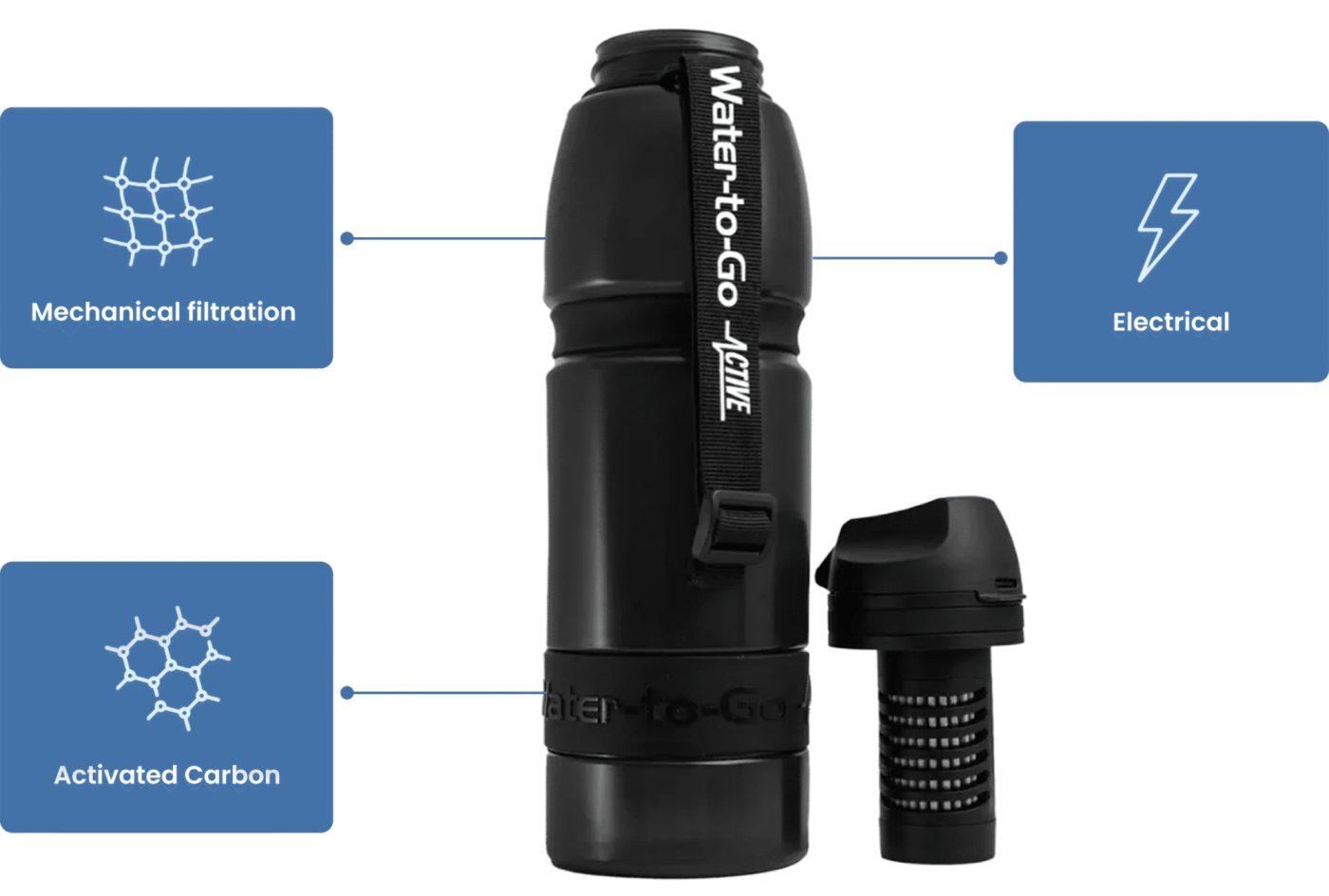
Each bottle contains a removable, recyclable filter combining three approaches:
- Mechanical filtration with a very small pore size that physically traps particles and larger microorganisms.
- Electropositive filtration, a positively charged medium that attracts and holds negatively charged contaminants such as many bacteria and viruses, which are smaller than the pores themselves.
- Activated carbon within the membrane, which reduces chlorine, chemicals and unpleasant tastes and odors.
Water-to-Go reports laboratory validation, including a BSC Laboratories report, showing removal of 99.9999% of bacteria and 99.98% of protozoa, cysts and parasites, along with viruses. It also lists chlorine, fluoride, lead and mercury among the contaminants addressed, with fluoride targeted through alumina nano technology and carbon. Testing has been carried out by labs in London, Florida, Bangalore and China, though the brand does not cite a single headline certification such as NSF.
The filter is designed for any non-saltwater source. It will not make seawater drinkable.
See Water-to-Go's current range
Choosing a bottle
- Eco Active 1L, 75cl and 55cl: made with plant-based materials rather than conventional plastic, leakproof, lightweight and dishwasher safe.
- Classic 75cl: dishwasher safe, with the familiar Water-to-Go design.
- Classic Go 50cl: a compact option for bags and commutes, hand-wash only.
- Active 75cl: listed at £29.99 on ScoopReview, with a hygienic click lid covering the spout and a larger spout the brand says improves flow by about 20% over earlier lids.
For hiking and cycling, a 75cl or 1L bottle reduces how often you need to stop and refill. For city use and travel, the 50cl or 55cl bottle is easier to carry.
Filter life and running costs
Filter life depends on bottle size. The 75cl filter is rated for about 200 liters, which the brand frames as about three months at roughly two liters a day. The 50cl filter treats about 130 liters, roughly two months. Water-to-Go offers newsletter reminders to replace filters, which is useful because carbon stages wear out without obvious warning.
Compared with buying bottled water while traveling, the savings add up quickly. Compared with a simple carbon bottle, replacement filters cost more, but they are doing considerably more work.
Practical tips for travel and the outdoors
A filter bottle is only as good as the way you use it. A few habits help you get the protection the brand describes:
- Pick the cleanest source available. Flowing water away from farms, towns and animal activity is better than still ponds. Avoid water with visible chemical sheen, algae blooms or an industrial smell, since no portable filter is designed for heavy chemical contamination.
- Keep the drinking side clean. Do not dip the mouthpiece or lid into untreated water, and wipe the spout before drinking if your hands have been in a stream.
- Let cloudy water settle. Silt shortens filter life, so let it settle in a separate container first, or pour off the clearer water.
- Replace on time. Note the date you fit a new filter. At around two liters a day, a 75cl filter is due in about three months; heavier use means sooner.
- Carry a backup. On long trips, pack a spare filter so you are not left relying on an exhausted one.
Delivery and policies
UK orders over £49.99 ship free via a 48-hour tracked service. The store's country selector covers the UK, USA, Canada, Australia, New Zealand and 18 European countries, with costs for other destinations shown at checkout. Return terms are on the brand's delivery and returns page. ScoopReview mentions a 30-day money-back guarantee, but confirm current terms directly before ordering.
Who it suits, and our verdict
Ideal for: travelers in places where tap water quality is uncertain, hikers, cyclists, paddlers and climbers, and anyone trying to cut single-use plastic.
Less ideal for: people who only drink treated tap water at home, where a pitcher is more economical, or anyone who wants a bottle with no ongoing filter costs.
Our verdict: Water-to-Go offers broader protection than most filter bottles, with microbiological, chemical and taste filtration in a single cartridge. Shorter filter life and the lack of a widely recognized certification hold it back slightly, but as a do-everything travel bottle it is one of the most capable we have reviewed.
Water-to-Go products at a glance
| Product | What it is | Price |
|---|---|---|
| Eco Active 75cl | Plant-based filter bottle with the three-in-one filter, rated about 200 liters per filter. | — |
| Active 75cl | Sports-style filter bottle with a hygienic click lid and faster-flow spout. | £29.99 |
| Eco Active 1L | Largest bottle in the range for long days outdoors. | — |
| Classic Go 50cl | Compact filter bottle for commuting and travel, with a filter rated about 130 liters. | — |
| Replacement filters | Removable, recyclable three-in-one filters sized to each bottle. | — |
Prices as listed on the brand's site at the time of our research and may change. Check the store for current pricing.
Water-to-Go FAQs
Is Water-to-Go legit?
Yes. Water-to-Go International Ltd is a UK company that has made filter bottles since around 2010 and reports independent lab testing across several countries.
What does a Water-to-Go filter remove?
The brand says its filter removes up to 99.9999% of bacteria, 99.98% of protozoa and parasites, and viruses, and reduces chlorine, fluoride and heavy metals such as lead and mercury.
How long does a Water-to-Go filter last?
About 200 liters, or roughly three months, for 75cl bottles, and about 130 liters, or two months, for 50cl bottles.
Can I use Water-to-Go with seawater?
No. The filter is designed for non-saltwater sources only.
Does Water-to-Go ship outside the UK?
Yes. It ships to the US, Canada, Australia, New Zealand and many European countries, with free UK delivery on orders over £49.99.
Travelers and outdoor users who want to refill from almost any fresh water source
Disclosure: InhouseHeal may earn a commission if you buy through links on this page. Our score is based on research of the brand's products, evidence, pricing and policies. How we review.