Truvaga brings non-invasive vagus nerve stimulation from an experienced medical device company to the wellness market. Two-minute sessions are quick and easy to fit into a day, and you can choose between the rechargeable, app-connected Truvaga Plus and the simpler, app-free Truvaga 350. It is a premium purchase, needs conductive gel or spray, and is not suitable for everyone.
What we like
- Made by electroCore, which also makes a prescription vagus nerve device
- Sessions take just two minutes
- Choice of app-connected Plus or no-setup 350 model
- Truvaga Plus is designed for at least three years and 30,000 sessions
- 30-day money-back guarantee and free standard shipping
Keep in mind
- Premium price compared with breathwork apps or vibration devices
- Requires conductive gel or spray each session
- Truvaga 350 is limited to 350 sessions, then is disposed of
- More contraindications than vibration-based devices
The vagus nerve runs from the brainstem through the neck to many organs, and it plays a central role in the body's rest-and-digest response. Stimulating it non-invasively through the skin of the neck has been studied for years in medical settings, and consumer devices now bring a version of that idea home.
Truvaga is one of the most credible of them, because it comes from electroCore, a company with a background in prescription neuromodulation. We looked at both models, how sessions work, what to watch for and who should avoid it.
The company behind Truvaga
Truvaga is a brand of electroCore, Inc., based in Rockaway, New Jersey. electroCore also makes gammaCore, a prescription non-invasive vagus nerve stimulator. Truvaga applies similar handheld technology to general wellness, with an emphasis on stress relief, relaxation, sleep routines and focus.
That medical device background is a meaningful point of difference in a category where many brands are new. Even so, Truvaga is sold as a wellness product, not a medical treatment, and the brand is clear about that.
How a session works
You apply a conductive gel or spray, hold the device against the side of your neck over the vagus nerve and run a session of about two minutes. The device delivers gentle electrical pulses through the skin. Most people feel a tingling sensation and sometimes a slight muscle twitch at the neck or jaw, which can be adjusted by changing intensity or position.
The goal is to encourage a calmer, parasympathetic state. Users often run a session in the morning, during a stressful afternoon or as part of a wind-down routine before bed.
Tips for better sessions
- Find the placement point by feeling for your pulse at the side of the neck.
- Use enough gel or spray for good contact.
- Start at a low intensity and increase gradually.
- Sit comfortably and breathe slowly during the session.
See Truvaga's current range
Truvaga Plus vs Truvaga 350
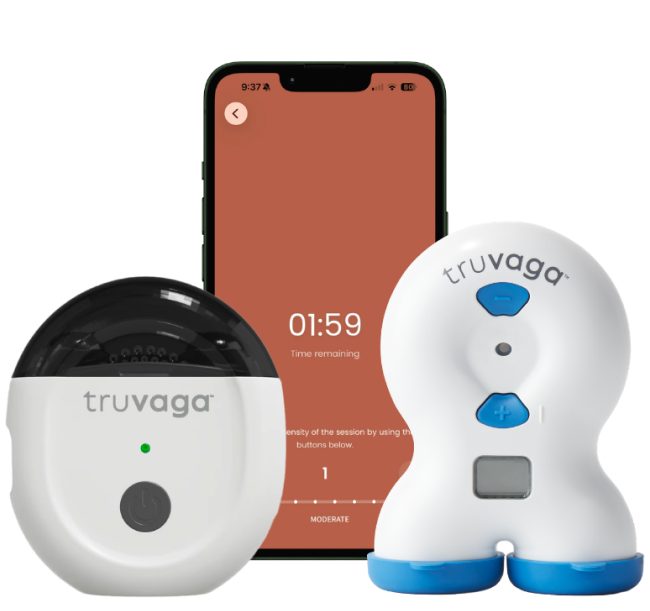
- Truvaga Plus: rechargeable and app-enabled, with unlimited sessions when used as recommended. electroCore says it is designed for at least three years and 30,000 sessions. It includes Signaspray, while Signagel is sold separately, and it integrates with Apple Health.
- Truvaga 350: no app, no cords, no charging and no phone setup. It comes preloaded with 350 two-minute sessions and is disposed of when they run out. It has a lower upfront price than the Plus.
If you plan to use Truvaga daily for the long term, the Plus is the better value over time. If you want to try vagus nerve stimulation without committing, or prefer to avoid apps, the 350 is the simpler choice. Note that some reviewers have raised Android compatibility concerns for the Plus app, so check the app store listing for your phone first.
Pricing and policies
Truvaga is a premium device, and the 350 is the lower-cost entry point. Prices change with promotions, and discount codes appear frequently, so check the official store for current pricing. Ongoing costs are mainly Signaspray and Signagel.
When comparing value, think in cost per session. A Truvaga Plus used daily for three years works out to a small amount per use, while the 350 has a fixed number of sessions and then needs replacing. If you are unsure whether you will stick with it, the 350 limits your commitment; if you already know you like vagus nerve stimulation, the Plus is the long-term buy.
Standard shipping is free, and Truvaga offers a 30-day money-back guarantee. We did not see detailed warranty terms during our research, so ask support or check the product documentation if that matters to you.
Safety: who should not use it
Because Truvaga uses electrical stimulation, it carries more cautions than vibration-based devices. People with implanted electronic devices such as pacemakers, and anyone with certain heart conditions, a seizure history, low blood pressure or who is pregnant, should consult a healthcare professional before use.
Possible side effects include tingling, temporary discomfort, skin redness or irritation, muscle twitching, mild headache and dizziness. Stop and seek advice if any of these persist.
Who it suits, and how it compares
Truvaga suits busy professionals, parents, students, athletes and frequent travelers who want a short, structured way to reset. Two minutes is about as quick as stress tools get.
A simple routine works well: one session in the morning before a busy day, and one in the early evening or before bed as part of a wind-down. Some people also use it before a presentation or a stressful conversation. Combining a session with slow, extended exhales may make the experience more relaxing, and it builds a breathing habit you can use when you do not have the device with you.
Pulsetto is the closest competitor: it is worn around the neck hands-free, with sessions of about 4 to 10 minutes. Apollo Neuro and Sensate use vibration instead of current, which makes them gentler and suitable for more people, though less direct. For a no-cost starting point, slow breathing exercises from an app such as Open can also stimulate a relaxation response.
Our verdict
Truvaga stands out for its pedigree, short sessions and the choice between a long-life rechargeable model and a simple session-limited one. Price, consumables and contraindications are the trade-offs. If you are medically cleared for electrical stimulation and want the quickest possible stress reset, it is one of the most credible options available.
Truvaga products at a glance
| Product | What it is | Price |
|---|---|---|
| Truvaga Plus | Rechargeable, app-enabled vagus nerve stimulator designed for at least three years and 30,000 sessions. | Check site |
| Truvaga 350 | App-free device preloaded with 350 two-minute sessions. | Lower upfront price than Plus |
| Signaspray Electrode Solution | Conductive spray for good skin contact during sessions. | — |
| Signagel Electrode Gel | Conductive gel alternative to the spray. | — |
Prices as listed on the brand's site at the time of our research and may change. Check the store for current pricing.
Truvaga FAQs
How long is a Truvaga session?
About two minutes. You hold the device to the side of your neck with conductive gel or spray applied.
What is the difference between Truvaga Plus and Truvaga 350?
Truvaga Plus is rechargeable, app-enabled and built for long-term use. Truvaga 350 needs no app or charging and includes 350 preloaded sessions before it is disposed of.
Is Truvaga a medical device?
Truvaga is sold as a general wellness device, not a medical treatment. Its maker, electroCore, separately sells a prescription device for medical use.
Does it hurt?
Most people feel tingling and possibly a mild muscle twitch. Start at low intensity and increase gradually until it feels comfortable.
Who should avoid Truvaga?
Anyone with a pacemaker or other implanted electronic device, certain heart conditions, a seizure history, low blood pressure or who is pregnant should talk to a doctor first.
Adults who want a fast, structured stress-relief session they can use anywhere
Disclosure: InhouseHeal may earn a commission if you buy through links on this page. Our score is based on research of the brand's products, evidence, pricing and policies. How we review.