Koia makes some of the better-tasting plant-based protein shakes on the market, with low sugar and real fiber. The Elite line's 32 g of protein per bottle is a standout for a dairy-free drink, though shakes cost more than powders and the ingredient list includes gums and natural flavors.
What we like
- Plant protein blend of pea, rice and chickpea
- Low sugar, typically around 4 g per bottle
- Elite line delivers 32 g protein in a 12 oz bottle
- Dairy-free, soy-free and non-GMO
- Widely available at Whole Foods, Target and Walmart
Keep in mind
- More expensive per gram of protein than powders
- Some lines are sold in stores only
- Contains gums and natural flavors, which purists may avoid
- Bottles are heavy to ship, so online orders work best in bulk
Koia sells ready-to-drink plant protein shakes aimed at people who want something more convenient than a powder and less sugary than a typical smoothie. The base is almond milk or coconut cream, the protein comes from a blend of pea, rice and chickpea, and sweetness comes mainly from monk fruit with a little cane sugar.
The brand has grown well beyond a single bottle. There are everyday nutrition shakes, a high-protein Elite line, an Elite version with added creatine, kids' drinks, protein powders and a clear protein drink called Pop. We looked at how the lines differ, what the nutrition panels show, and when a ready-to-drink shake makes more sense than mixing your own.
What Koia is trying to do
Koia's pitch is approachable plant nutrition in a bottle. The shakes are designed to work as a quick breakfast, a post-workout drink or an afternoon snack, without dairy, soy or a heavy sugar load. They are sold online and through mainstream grocery chains including Whole Foods, Target and Walmart, as well as in coffee shops and convenience stores in many parts of the US.
The plant-protein blend matters. Pea protein alone is a little low in certain amino acids, while rice protein fills some of those gaps, and chickpea protein adds another complementary source. Together they create a more rounded amino acid profile than a single plant protein, which is one reason plant blends have become standard in the category.
The lines, and how they differ
Nutrition and Protein Shakes
The everyday range. The Vanilla Bean Protein Shake, one of the brand's best-sellers, has around 18 g of plant protein, 4 g of sugar and 7 g of fiber per bottle. Protein Coconut Almond is another popular flavor at around 18 g of protein. These are the shakes to keep in the fridge for breakfast on busy mornings.
Elite
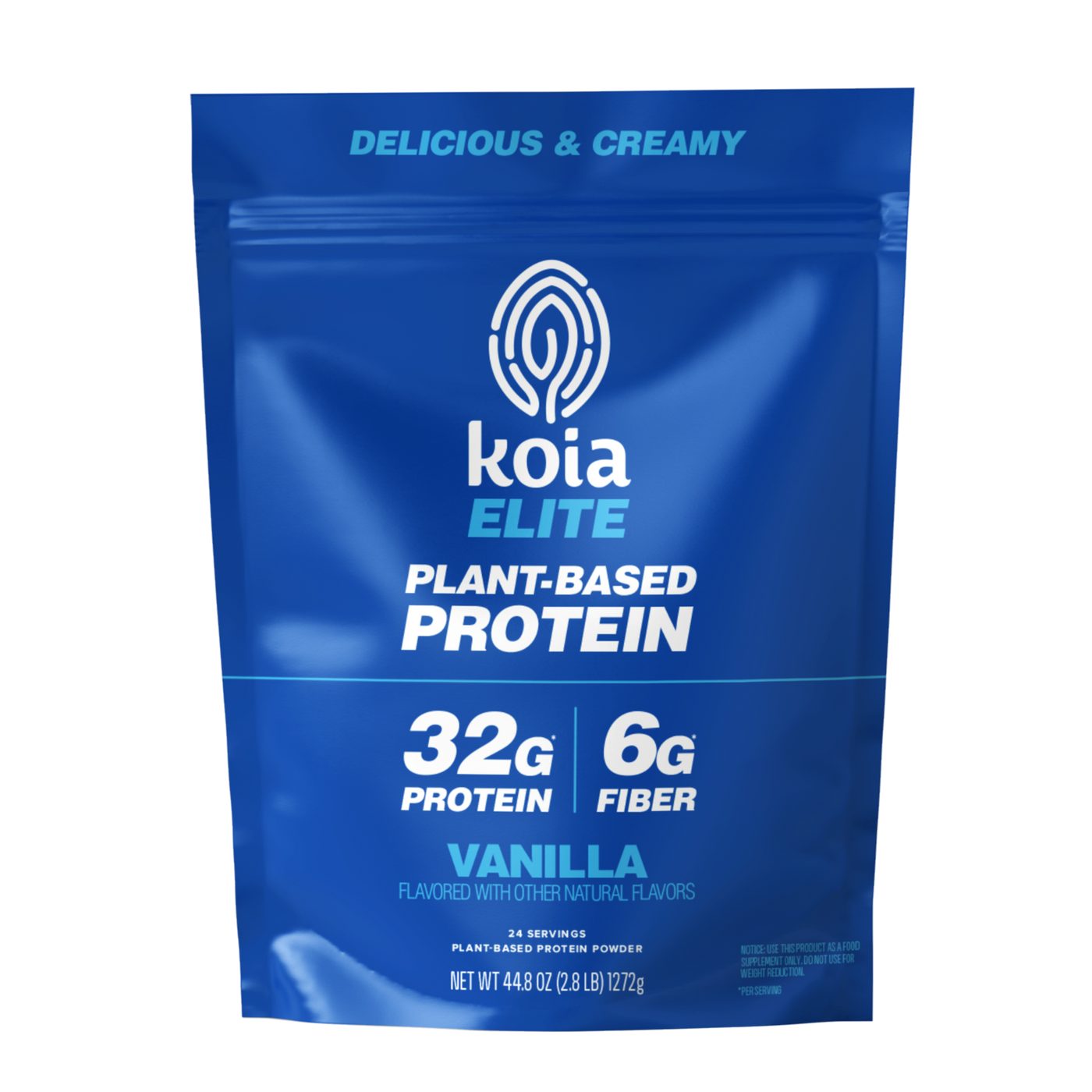
The high-protein line for training days. A 12 fl oz bottle of Elite Vanilla delivers 32 g of complete plant protein, 4 g of sugar, around 6 g of fiber and 210 calories, and it is made without seed oils, using avocado oil instead. That is a serious amount of protein for a dairy-free shake.
Elite +Creatine
An Elite variant that adds creatine for strength training, currently sold in stores.
Kids
Smaller-protein shakes in flavors like Fruity Cereal, with around 9 g of protein, 4 g of sugar and 4 g of fiber, plus added fruit and vegetable ingredients.
Powders and Pop
Koia also sells protein powders for people who prefer to mix their own, and Pop, a clear protein drink that is lighter and more refreshing than a creamy shake.
See Koia's current range
A closer look at the ingredients
Taking the Elite Vanilla as an example, the ingredient list runs: filtered water, pea protein, chicory root fiber, organic cane sugar, natural flavors, avocado oil, sunflower lecithin, dipotassium phosphate, sea salt, vanilla extract, locust bean gum, gellan gum and monk fruit extract.
That tells you a few things. The fiber comes largely from chicory root, which is a prebiotic but can cause gas in some sensitive people. The small amount of cane sugar is balanced by monk fruit, which keeps total sugar low. And the gums are there to keep the shake smooth and stable on the shelf. None of these are red flags for most people, but those following very strict whole-food diets may prefer a homemade shake.
Shake or powder: which makes sense?
Ready-to-drink shakes win on convenience. There is nothing to measure, no shaker bottle to wash, and you can drink one in the car or at your desk. They are especially useful for people who skip breakfast, travel a lot or struggle to eat after early workouts.
Powders win on cost and flexibility. Per gram of protein, a tub of powder is almost always cheaper than bottles, and you can control thickness, flavor and add-ins. Koia's own powders give you the same plant-protein approach in a cheaper format.
A practical split for many households is to keep a few Elite bottles for training days and rely on powder or whole foods the rest of the week.
Pricing, shipping and availability
Most Koia bottles retail in the $3 to $5 range in stores, depending on the line and retailer. Online, a 12-pack of Elite Vanilla is about $49.99, which works out to just over $4 a bottle. Bundles such as the Wellness Duo and Performance Duo combine products for a small saving, and sitewide discount codes appear regularly.
Online orders ship via FedEx Ground, are packed Monday to Friday, and typically arrive within five to seven business days. Shipping is free on orders over $50, so buying a full case usually gets you over the line. Before stocking up, check the storage instructions on the specific product you are ordering, and refrigerate opened bottles, finishing them within the time stated on the label.
Who should try Koia
Koia suits vegans, people who are lactose intolerant or avoid dairy, and anyone who wants a quick protein drink without the sugar of many coffee-shop smoothies. The Elite line is a strong pick for plant-based athletes, while the kids' range gives parents a lower-sugar alternative to juice boxes.
It is less suited to people with nut allergies, since several shakes are almond-based, and to budget-conscious shoppers who drink a protein shake every day. In that case, a plant protein powder such as Orgain or a complete meal shake like Ka'Chava will usually work out cheaper per serving.
Our verdict: a reliable, good-tasting plant protein shake with genuinely low sugar and an impressive high-protein option. Worth keeping in the fridge for busy days.
Koia products at a glance
| Product | What it is | Price |
|---|---|---|
| Elite Vanilla | A 12 oz plant protein shake with 32 g protein, 4 g sugar and no seed oils. | $49.99 per 12-pack |
| Vanilla Bean Protein Shake | Best-selling everyday shake with about 18 g protein, 4 g sugar and 7 g fiber. | about $3–$5 per bottle in stores |
| Protein Coconut Almond | A creamy everyday shake with around 18 g plant protein. | about $3–$5 per bottle in stores |
| Kids Fruity Cereal | A smaller kids' shake with about 9 g protein and 4 g sugar. | — |
| Koia Protein Powder (Vanilla) | The plant-protein approach in a cheaper, mix-your-own format. | — |
Prices as listed on the brand's site at the time of our research and may change. Check the store for current pricing.
Koia FAQs
Is Koia healthy?
Koia shakes are low in sugar, high in plant protein and include fiber, which makes them a reasonable convenience option. They do contain gums and natural flavors, so they are a processed food rather than a whole food.
How much protein is in Koia?
Everyday shakes typically have around 18 g of protein, Elite shakes have 32 g, and kids' shakes about 9 g per bottle.
Is Koia dairy-free?
Yes. Koia uses plant proteins from pea, rice and chickpea with an almond milk or coconut cream base, and the shakes are dairy-free and soy-free.
Does Koia need to be refrigerated?
Storage instructions vary by product, so follow the label on the line you buy. All shakes taste best chilled and should be refrigerated once opened.
Where can I buy Koia?
Koia is sold on its website and at retailers including Whole Foods, Target and Walmart. Some lines, such as Elite +Creatine, are currently sold in stores only.
Dairy-free eaters who want a grab-and-go, low-sugar protein drink
Disclosure: InhouseHeal may earn a commission if you buy through links on this page. Our score is based on research of the brand's products, evidence, pricing and policies. How we review.