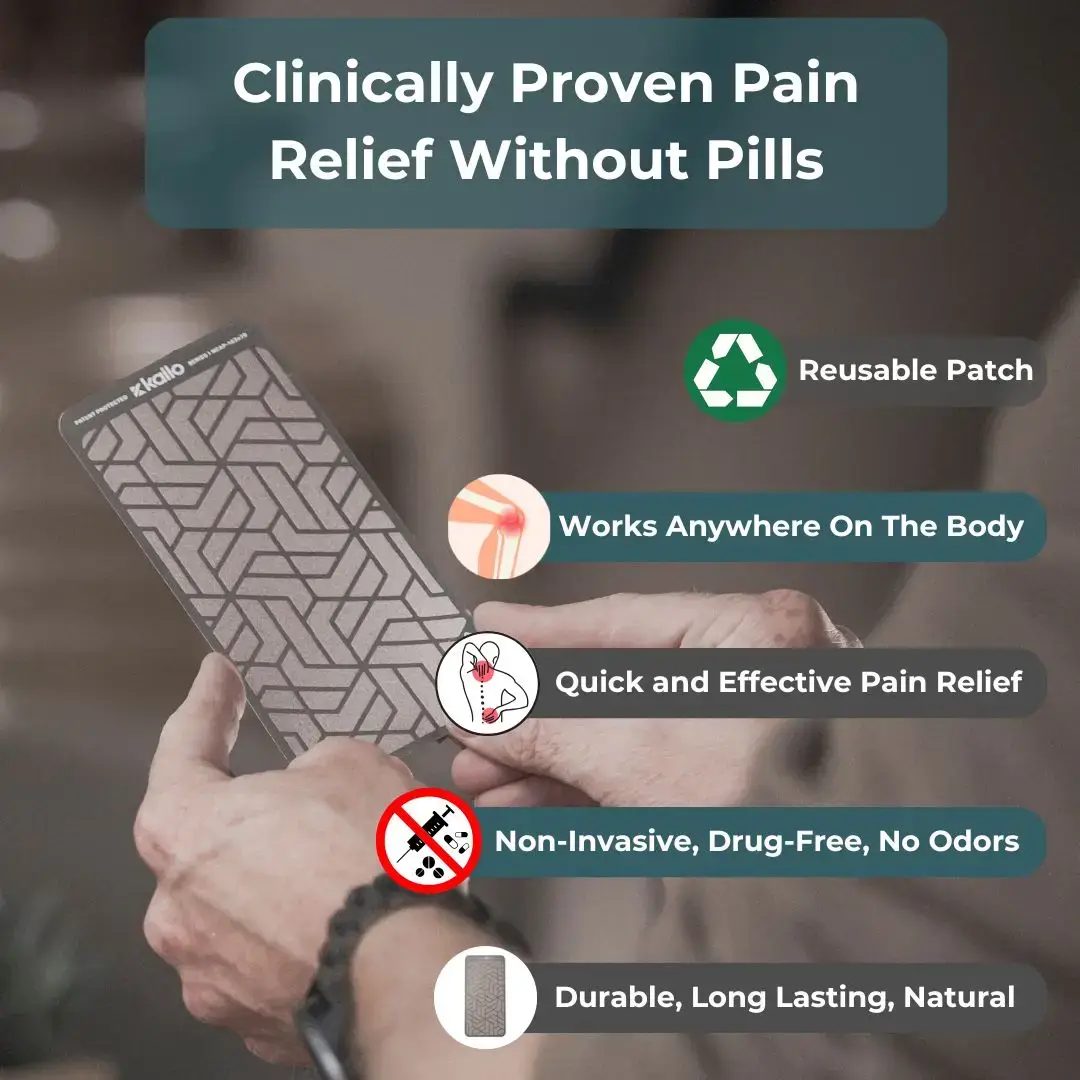
Kailo sells a reusable, battery-free patch that the brand says works with the body's own electrical signals to change how pain is perceived. It is easy to use and carries a real money-back window, but independent evidence is limited and results vary, so treat it as a low-risk experiment rather than a proven treatment.
What we like
- No batteries, wires, drugs or creams; you simply stick it near the sore area
- One original Kailo patch is rated for a year of round-the-clock use
- Water-resistant and reusable, with low-cost adhesive refills
- Up to 90 days to ask for a refund on the original patch
- Free US shipping over $49
Keep in mind
- The proposed mechanism is not well established and independent research is thin
- Return shipping is generally at your own expense
- Return windows differ by product, which is easy to miss
- Results vary widely; may not help with severe or nerve-related pain
Pain relief patches usually mean menthol, lidocaine or a warming gel. Kailo is different: its patch contains no medication and no battery. Instead, the company says each patch is built around tiny charged copper capacitors that interact with the nervous system's existing electrical signaling, with the aim of changing how the brain registers pain from the area underneath.
That is an unusual pitch, and it deserves a careful look. In our research we focused on what Kailo actually sells in 2026, how the two main patch versions differ, what the ongoing costs look like, and how the refund rules work, so you can decide whether a trial is worth it for you.
What Kailo is and how the brand says it works
Kailo is sold by Kailo Labs LLC, which says it licenses its core technology from a company called nCAP Technologies and describes the product as American made. The patch is a thin, flexible disc that you attach with a replaceable adhesive, either directly on the skin or, according to the company, over a thin layer of clothing close to the painful spot.
The brand's explanation is that the patch does not send any current into the body, which is how it separates itself from TENS units. Rather, it is described as working with the body's own signals, a bit like an antenna. Kailo's site carries a 'backed by published research' badge and links to a clinical trials page, but the mechanism has not been widely validated by independent studies, and mainstream pain guidelines do not yet include this kind of device. It is fair to call it promising-sounding but unproven.
The range: patches, refills and accessories
The catalog is small, which makes choosing easier.
- The Kailo (original): the longest-lasting option, rated by the brand for one year of 24/7 use, with a 90-day money-back window.
- Kailo 2.0: a newer design billed as softer, lighter and more flexible, rated for 90 days of continuous use, with a 30-day money-back window.
- Flex patch: a shorter-life patch aimed at short-term use, often sold in bundles with the original.
- Element patch: a longer-life version that still appears in the return policy, though it was not prominently listed when we looked.
- Accessories: adhesive packs for each patch type, KT-style tape, a cohesive bandage and an armband that holds the patch in place on limbs.
Because the adhesive is what wears out, plan on buying refills. They are inexpensive, but they are a recurring cost that adds up if you wear the patch every day.
See Kailo's current range
Which patch to start with
For most first-time buyers the original Kailo is the more sensible pick. When we checked, it cost the same as Kailo 2.0 at about $99, yet it carries a longer usage rating and, crucially, a longer refund window. Ninety days gives you time to try different placements and see whether any benefit is consistent, rather than relying on a good or bad first week.
Choose Kailo 2.0 if comfort and flexibility matter more to you, for example if you want to wear it on a curved joint such as a knee or shoulder, and you are confident you will know within a month whether it suits you. Add the armband if you mainly want relief on an arm, calf or thigh, where adhesive alone can lift during exercise.
Getting a fair trial
The brand suggests placing the patch on or near the source of discomfort, and some users report needing to experiment with position. Keep a simple daily note of pain levels and activity for a few weeks; it makes it far easier to judge honestly before the refund window closes.
Prices, shipping and the fine print on refunds
At the time of our research, both main patches were listed at $99 each, down from higher list prices. Adhesive 10-packs ran from about $9 for the XS size to $24.99 for the standard size, Flex adhesive 5-packs were $14.99, the armband was $11 and a roll of KT tape was $3.99. Shipping is free within the US on orders over $49.
Refunds need a little care. You contact support within 90 days for the original patch, adhesives, tape and bandage, or within 30 days for Flex patches and the armband. Subscriptions are excluded, any free items that came with your order must be sent back too, and you need to post the return within two weeks of receiving authorization. Except for domestic Element returns, you pay return postage. Refunds are issued to the original card within a few business days of the return arriving.
Who Kailo suits, and who should look elsewhere
Kailo makes most sense for people with nagging, localized aches, such as a stiff lower back after long drives or a sore knee after runs, who would like to rely less on over-the-counter painkillers and are comfortable trying something with limited evidence behind it. Its lack of drugs and batteries also appeals to those who find TENS wires fiddly or who react to topical creams.
It is a weaker fit if you have severe, worsening or undiagnosed pain, nerve pain, or an injury that needs assessment. In those cases a clinician should come first. If you want options with a more established track record, heat, cold, targeted self-massage tools and guided exercise are all well understood, and a physical therapist can help you combine them.
Our verdict
Kailo is a convenient, low-effort product with a clear refund path, which makes it a reasonable experiment for everyday aches. What holds it back is evidence: the science behind battery-free nano-capacitor patches is not settled, and individual results vary. Buy the original patch, track your results, and use the 90-day window if it is not earning its place.
Kailo products at a glance
| Product | What it is | Price |
|---|---|---|
| The Kailo (original) | Reusable battery-free patch rated for a year of continuous use, with the longest refund window. | about $99 |
| Kailo 2.0 | Softer, lighter, more flexible patch rated for 90 days of 24/7 use. | about $99 |
| Kailo/Element Adhesives 10 Pack | Replacement adhesives for the original and Element patches. | $24.99 |
| Flex Adhesives 5 Pack | Refill adhesives sized for the Flex patch. | $14.99 |
| Kailo/Element Armband | Strap that holds the patch on an arm or leg during activity. | about $11 |
Prices as listed on the brand's site at the time of our research and may change. Check the store for current pricing.
Kailo FAQs
Is Kailo legit?
Kailo is a real company, Kailo Labs LLC, that ships orders and honors a published money-back policy. Whether the patch works is a separate question: the brand cites research, but independent evidence for this type of device is limited and results vary from person to person.
Does Kailo use electricity or batteries?
No. The brand says the patch contains no battery and sends no current, which is how it differs from TENS units. It is described as working with the body's existing electrical signals instead.
What is the difference between Kailo and Kailo 2.0?
Kailo 2.0 is softer and more flexible and is rated for 90 days of continuous use with a 30-day refund window. The original is rated for a year of use and comes with a 90-day refund window, and the two were priced the same when we checked.
How long does a Kailo patch last?
The original is rated for about a year of 24/7 wear and Kailo 2.0 for about 90 days. The adhesive wears out much sooner, so budget for refill packs.
Can I get a refund if Kailo doesn't work for me?
Yes, within the stated window: 90 days for the original patch and 30 days for Kailo 2.0, Flex patches and the armband. You usually pay return shipping, and any free items from your order must be returned too.
People curious about a drug-free, reusable option for localized everyday aches
Disclosure: InhouseHeal may earn a commission if you buy through links on this page. Our score is based on research of the brand's products, evidence, pricing and policies. How we review.