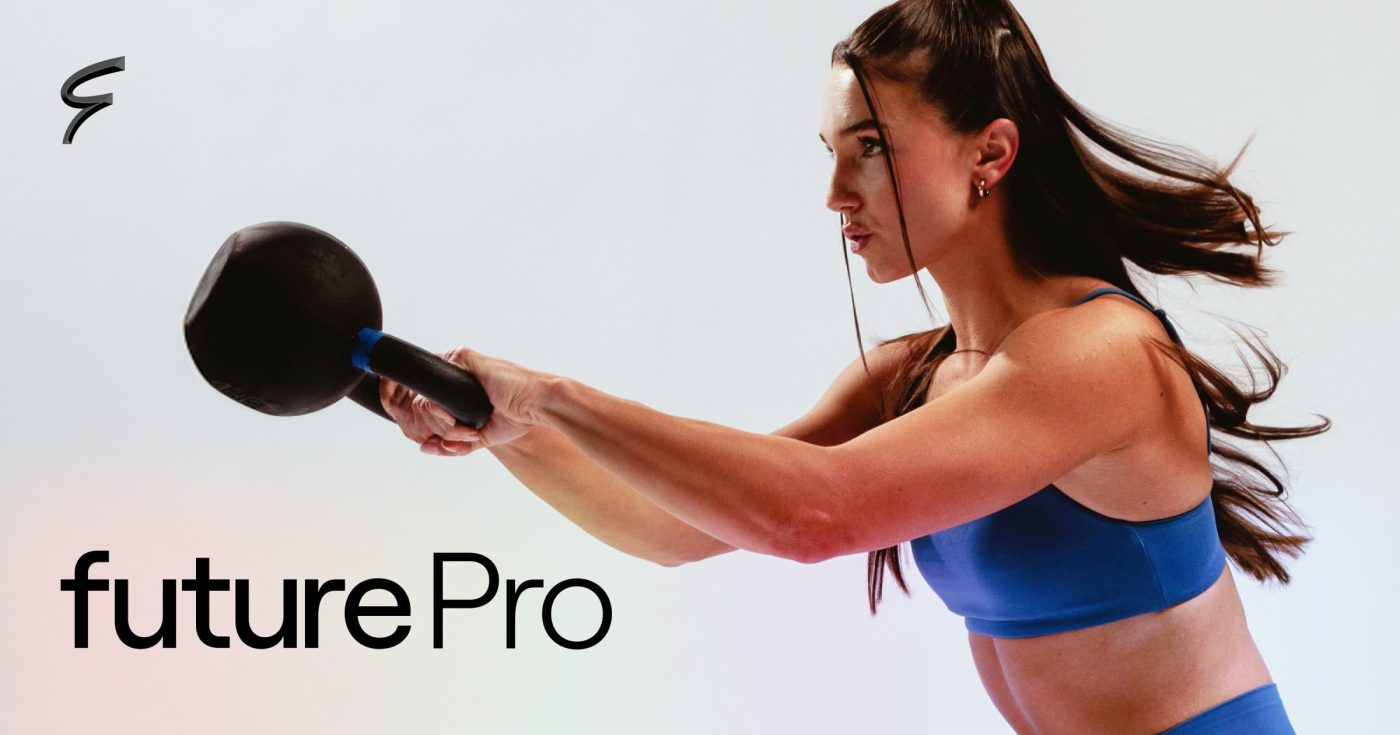
Future gives you a real personal trainer who writes your program around your schedule and equipment, then keeps you accountable through the app. At $199 a month it costs far more than workout apps, but much less than most in-person training, and the 30-day refund window lowers the risk of trying it.
What we like
- Plans written and adjusted by a human coach, not an algorithm
- Works around your equipment, whether a full gym or a pair of dumbbells
- Regular check-ins by message, video demos and voice notes
- Freedom to move workouts and change plans without penalty, or switch coaches
- 30-day full-refund window; first month offered at $50
Keep in mind
- $199 a month after the first month is a premium price
- No live, in-person form correction
- Data-driven features rely on syncing a wearable or health app
- Value depends heavily on your coach match
Most workout apps give you a library and leave the rest to you. That works for self-starters, but many people know exactly what they should be doing and still do not do it. Future tackles that problem by pairing you with a professional coach who writes your program, sends it to your phone, monitors what you complete and checks in when you go quiet.
In our research, Future is best understood not as a fitness app but as remote personal training with an app as the delivery method. That framing explains both its strengths and its price. Here is how the service works, what you pay and who it suits.
How Future works, step by step
- Questionnaire. You describe your goals, training experience, preferred workout times and the equipment you have access to.
- Coach match. Future pairs you with a coach, and you have an onboarding conversation so they understand your history, constraints and motivation.
- Weekly plans. Your coach builds workouts that arrive in the app each week, with video demonstrations, voice cues and form guidance for each movement.
- Ongoing check-ins. Coaches message you through the app, send voice notes and adjust your plan based on how sessions go.
- Adjustments any time. You can move workouts, change training days or shift goals without penalty, and switch to a different coach if the fit is not right.
If you sync a wearable such as an Apple Watch, or connect Apple Health or Google Fit, your coach can see data like heart rate, calories and workout duration. That gives them a more objective view of how hard you are working.
What it costs
Future currently lists a first month for $50, then $199 a month. You can cancel within 30 days for a full refund. Plan changes, goal adjustments and extra content are included in the subscription rather than charged separately.
Is $199 a lot? Compared with on-demand workout apps that cost $15 to $30 a month, yes. Compared with in-person personal training, where a single session often costs a meaningful share of that, it can be good value, because you get a full weekly program and continuous coaching rather than one or two hours a week with a trainer.
A useful way to judge value is cost per workout. If you complete four sessions a week, $199 a month works out to roughly $11 to $12 per programmed session, plus coaching between them. At one session a week, it is closer to $45 per workout, and a cheaper app or occasional in-person sessions may make more sense. Future is best value for people who will actually train three or more times a week.
See Future's current range
What a good coach relationship looks like
The quality of your experience depends on your coach, so it pays to set expectations early. In our research, members who get the most from Future tend to:
- Be specific about goals. "Deadlift my body weight by summer" or "run a 5K without stopping" gives a coach more to work with than "get fitter."
- Share constraints honestly. Old injuries, travel weeks, kids' schedules and limited equipment all shape a realistic plan.
- Log and respond. Coaches can only adjust what they can see. Recording weights and replying to check-ins keeps the plan relevant.
- Use the switch option. If communication style or programming does not click within a few weeks, request a new coach rather than quietly drifting away.
Equipment and devices
One of Future's practical advantages is that it adapts to what you have. A coach can program for a full commercial gym, a hotel fitness room, a garage setup or just bodyweight and a set of bands. That makes it a good partner for home equipment you already own, whether that is a set of adjustable dumbbells, a rack or a Tonal.
The app shows workouts with video demonstrations and supports watch-based tracking. If wearable data matters to you, confirm which devices are supported for your phone before subscribing.
Remote coaching does have one built-in limit: your coach cannot physically adjust your position. Filming a set from the side and sending it for feedback is a practical workaround for lifts like squats and deadlifts, and many members use it to fill that gap.
Who should consider Future
Strong fit: busy professionals with unpredictable schedules, people returning to exercise who want structure and encouragement, and experienced lifters or runners who want programming expertise without managing it themselves. It also suits people who have tried self-guided apps and stalled.
Weaker fit: anyone on a tight budget, people who prefer the energy of group classes, and complete beginners who would benefit from hands-on form correction in person for the first few sessions. For lower-cost, music-driven group workouts, LES MILLS+ and the Zumba app are worth comparing.
Getting value from the first 30 days
Because the refund window is 30 days, treat the first month as a structured trial. Complete every scheduled workout, respond to each check-in and ask your coach at least one question about why the plan looks the way it does. By the end, you should be able to judge whether the program fits your life, whether the communication feels personal, and whether you are more consistent than you were on your own. If the answer to all three is yes, the monthly fee is buying something real.
Our verdict
Future is a well-executed version of remote coaching: personal programming, real accountability and the flexibility to fit training around a messy schedule. It is expensive by app standards, but the $50 first month and 30-day refund window make it easy to test. If consistency is your main obstacle, it is one of the more effective solutions we have looked at.
Future products at a glance
| Product | What it is | Price |
|---|---|---|
| Future Coaching Membership | Monthly remote personal training with a dedicated coach and weekly custom plans. | $199/mo |
| Intro first month | Discounted first month to try coaching, with a 30-day full-refund window. | $50 |
| Coach check-ins and messaging | In-app messages, voice notes and video demos from your coach. | included |
| Wearable and health-app sync | Shares heart rate, calories and duration with your coach via Apple Watch, Apple Health or Google Fit. | included |
Prices as listed on the brand's site at the time of our research and may change. Check the store for current pricing.
Future FAQs
How much does Future cost?
Future lists a $50 first month, then $199 a month. Plan changes, goal adjustments and extra content are included.
Can I cancel Future?
Yes. Future states that you can cancel within 30 days for a full refund. Check the terms in the app for cancellation after that window.
Is Future a real personal trainer?
Yes. You are matched with a professional coach who writes your program, monitors progress and checks in through the app. You can switch coaches if the match is not a good fit.
Do I need a gym membership to use Future?
No. Coaches build plans around whatever equipment you have, from a full gym to dumbbells or bodyweight only.
Do I need an Apple Watch for Future?
Future works with wearables like the Apple Watch and with Apple Health and Google Fit, which lets your coach see workout data. Check current device requirements before subscribing.
People who know what to do but struggle to do it consistently, and want accountability from a real person
Disclosure: InhouseHeal may earn a commission if you buy through links on this page. Our score is based on research of the brand's products, evidence, pricing and policies. How we review.