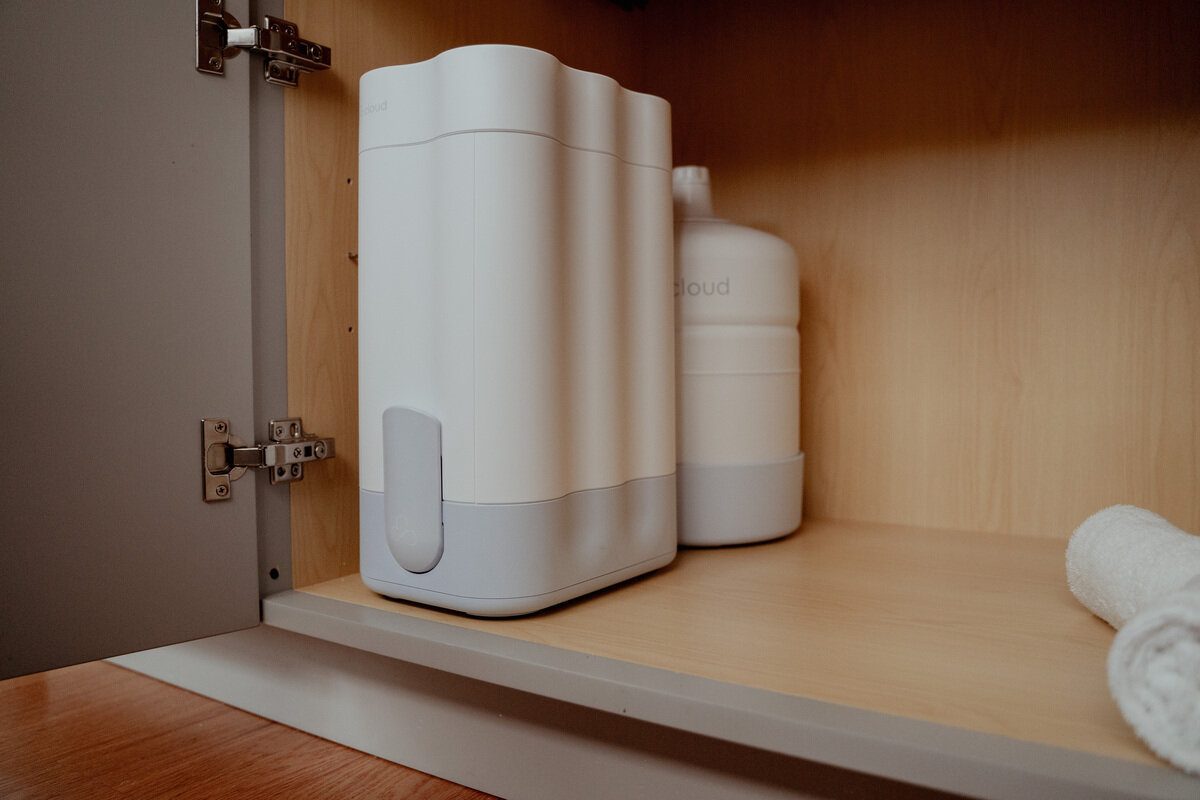
Cloud takes a focused approach: a single under-sink reverse osmosis system with remineralization and sensors at three points that report to an app. It is certified to NSF/ANSI 58 and easier to live with than most RO setups, but the price is premium and policy details are thinner than we would like.
What we like
- Certified to NSF/ANSI 58 for system performance, with third-party testing to NSF/ANSI 42 and 53
- TDS sensors at the inlet, after the membrane and after remineralization, all visible in the app
- Remineralizing post-filter adds back calcium, magnesium and potassium
- Battery powered, so no outlet is needed under the sink, with about a 30-minute install
- Filters are replaced based on actual usage rather than a fixed calendar
Keep in mind
- At $750, it costs more than many conventional under-sink RO systems
- Uses a 2.8-gallon storage tank rather than a tankless design
- Under-sink installation is not ideal for most renters
- Return policy and warranty terms are not clearly published
Most reverse osmosis systems are the same plumbing kit in different colors: a row of cartridges, a tank and a separate faucet, with filter changes left to guesswork and a calendar reminder. Cloud set out to make that setup smarter. Its single product, the Cloud RO, adds sensors and an app so you can see how well the system is working and when each filter actually needs changing.
We reviewed Cloud's specification sheet, certification claims, running costs and installation requirements, and compared what it offers with more conventional under-sink systems. It is a thoughtful product for a specific kind of buyer, though not the cheapest way to get reverse osmosis water.
A one-product company
Cloud Water Filters does not sell pitchers, shower heads or whole-house systems. Its catalog is the Cloud RO and the replacement filters that go with it. That narrow focus means the whole experience, from installation to filter replacement, has been designed as one system rather than assembled from generic parts.
The brand's main selling points are data and convenience. The app shows system status, individual filter health, tank volume and pressure, battery health and how much water you are using. It also pulls local contaminant data by zip code through SimpleLab, which helps you understand what your tap water is likely to contain before it reaches the filter.
Inside the four filtration stages
- Sediment filter: 5-micron polypropylene to catch sand, rust and larger particles.
- Carbon block: 1-micron coconut carbon with anti-scale properties, targeting chlorine, taste, odor and some organic compounds.
- Reverse osmosis membrane: a Dow Filmtech membrane with 96% salt rejection, which does most of the purification work.
- Remineralizing post-filter: ceramic beads that add calcium, magnesium, potassium, sodium, zinc and trace minerals, and raise the pH to roughly 7.5 to 9.5.
Cloud states that the full system is certified to NSF/ANSI 58, the standard for reverse osmosis drinking water systems, and that it was third-party tested to NSF/ANSI 42 and 53 by SGS Laboratories. The brand also reports 98% TDS reduction. Contaminants it highlights include PFAS, lead, fluoride, pesticides, pharmaceuticals and microplastics.
See Cloud Water Filters's current range
Specs that matter day to day
- Production: 50 gallons per day, with a 0.625 GPM flow at the faucet.
- Waste ratio: 1:1, meaning about one gallon goes to drain for each gallon of purified water. That is efficient for a tank system.
- Storage: a 2.8-gallon tank with 40 to 45 PSI outlet pressure.
- Power: battery operated, with a battery life of more than two years, so you do not need an outlet under the sink.
- System life: about 10 years.
- Faucet: lead-free stainless steel, available in several finishes.
Installation is quoted at about 30 minutes, with fittings pre-installed and a pressure regulator included. A handy homeowner can manage it, but anyone uneasy with plumbing should budget for a plumber.
Running costs and filter changes
The Cloud RO costs $750. Replacement filters range from about $100 to $200 depending on which stage you are changing, and Cloud estimates the average annual cost at around $200. For a family of four, filters typically need replacing every 9 to 12 months, though the whole point of the sensors is that you replace them when the data says so, not on a fixed schedule.
Filter changes use a tool-free twist design, and you can set up automatic shipping of replacements through the app. Over several years, the ongoing cost compares well with buying bottled water, although a basic certified pitcher remains cheaper if your needs are modest.
Who should consider Cloud
Strong fit: homeowners who drink and cook with a lot of tap water, families replacing bottled water, and people who like seeing measurable proof that their filter is working. The remineralization stage also makes it a good choice if you have tried RO water before and found it flat.
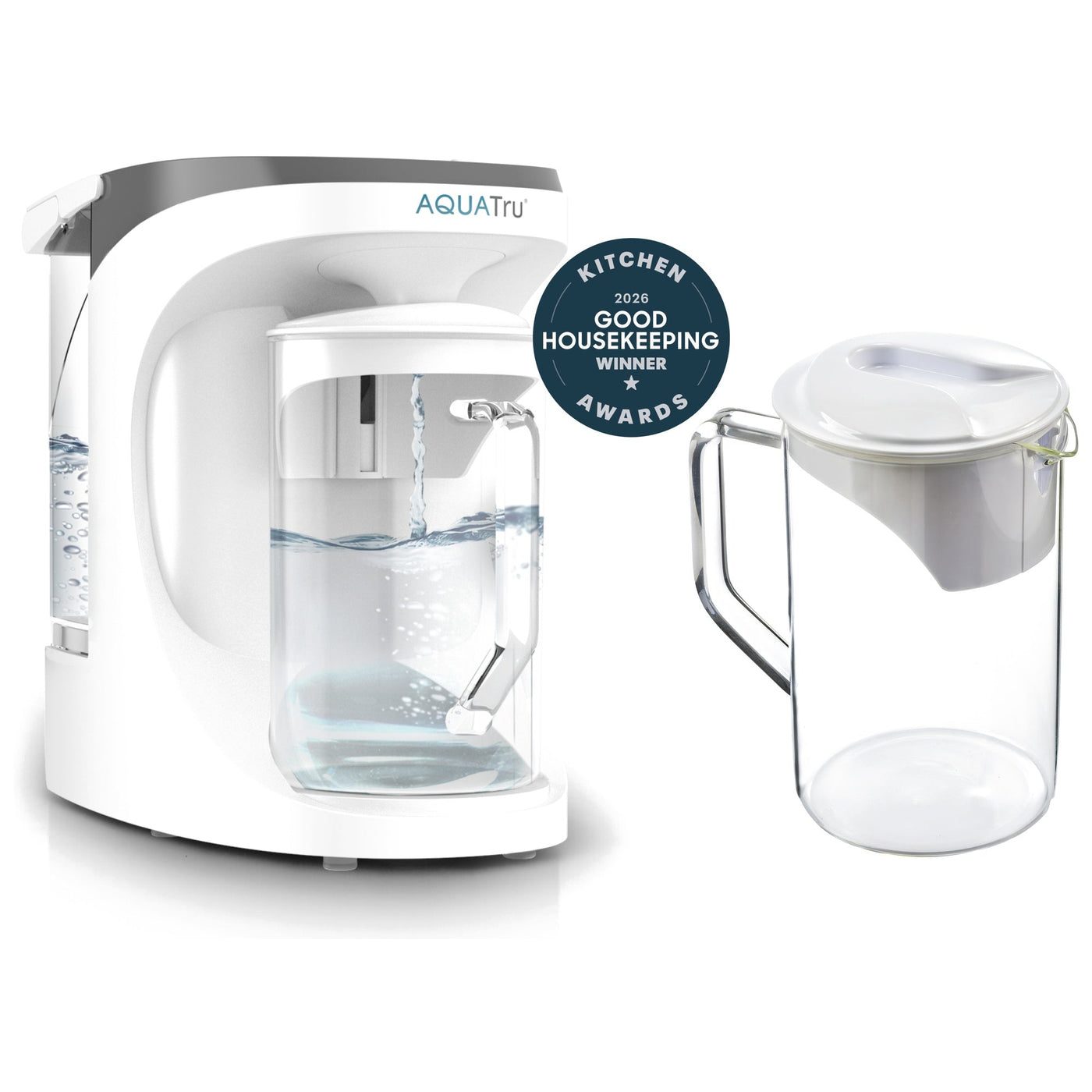
Less suitable: renters who cannot modify plumbing, buyers on a tight budget, people who need whole-home treatment for showers and appliances, and anyone who prefers a simple device without an app. If you want reverse osmosis without installation, a countertop unit such as AquaTru is the more practical route.
Because return and warranty terms are not clearly spelled out on the specification pages we reviewed, email support before ordering and get the current policy in writing.
Before you order: a quick checklist
- Check your water pressure. The system is rated for roughly 40 to 100 PSI inlet pressure, and a pressure regulator is included for homes at the high end.
- Measure the cabinet. You need room for the modular base and the 2.8-gallon tank, plus a spot on the sink or counter for the dedicated faucet.
- Look at your local data. The app's zip code report and your utility's annual water quality report will tell you whether reverse osmosis is overkill or exactly what you need.
- Plan for minerals and pH. If you prefer neutral-tasting water, note that the remineralizing stage raises pH into the alkaline range.
- Ask about policies. Confirm warranty length and return terms with support before you buy.
Our verdict
The Cloud RO is one of the more genuinely useful smart home water products we have looked at. Sensors at three points, NSF/ANSI 58 certification, sensible remineralization and a battery that removes the need for an outlet all add up to an RO system that is easier to trust and maintain. The trade-offs are price and limited policy transparency. If you are already set on under-sink reverse osmosis and value the data, it is well worth a look.
Cloud Water Filters products at a glance
| Product | What it is | Price |
|---|---|---|
| Cloud RO | Four-stage under-sink reverse osmosis system with remineralization, sensors and app tracking. | $750 |
| Replacement filter set | Sediment, carbon block, RO membrane and remineralizing filters, replaced as the app indicates. | $100–$200 per filter |
| Stainless steel faucet | Lead-free dedicated drinking water faucet offered in multiple finishes. | — |
Prices as listed on the brand's site at the time of our research and may change. Check the store for current pricing.
Cloud Water Filters FAQs
Is Cloud Water Filters legit?
Yes. Cloud sells a single under-sink reverse osmosis system that it says is certified to NSF/ANSI 58 and third-party tested to NSF/ANSI 42 and 53 by SGS Laboratories.
Does the Cloud RO need electricity?
No outlet is required. The system runs on a battery that Cloud says lasts more than two years.
How often do Cloud filters need replacing?
Replacement is based on usage and water quality. Cloud says a family of four typically replaces filters every 9 to 12 months, at an average cost of around $200 a year.
Does Cloud add minerals back to the water?
Yes. The final stage adds calcium, magnesium, potassium and trace minerals and raises the pH to roughly 7.5 to 9.5.
Can I install the Cloud RO myself?
Cloud quotes about 30 minutes for installation with pre-installed fittings. If you are not comfortable working under a sink, hire a plumber.
Homeowners who want under-sink reverse osmosis with real-time water quality data
Disclosure: InhouseHeal may earn a commission if you buy through links on this page. Our score is based on research of the brand's products, evidence, pricing and policies. How we review.