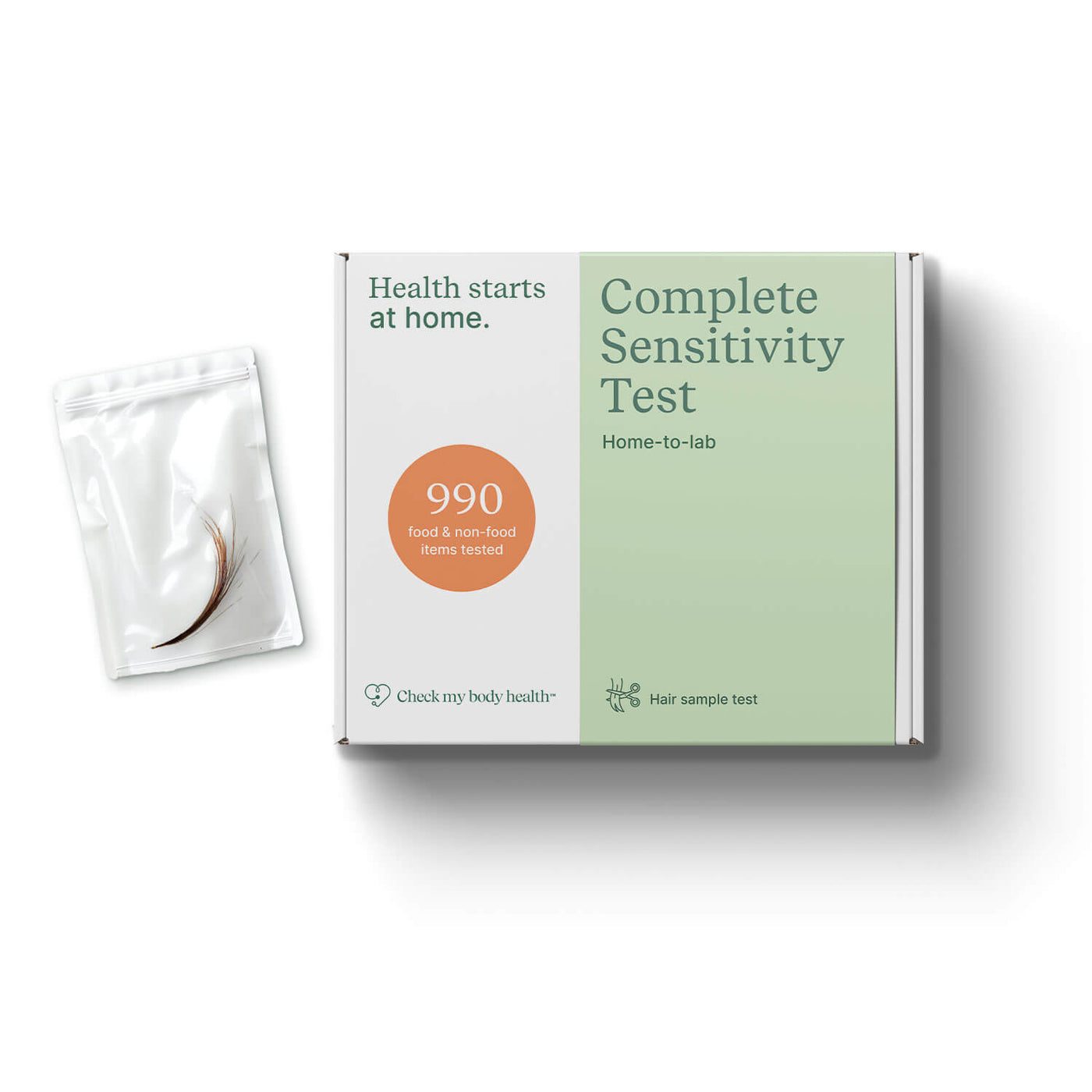
Check My Body Health makes sensitivity testing cheap and painless: you send a few strands of hair and receive a long report of foods and substances flagged as possible triggers. The method, bioresonance, is not scientifically validated, so treat the results as prompts for a food diary rather than as answers, and see a clinician for real symptoms.
What we like
- Very low entry price, especially during frequent sales
- Needle-free hair sample collected at home in minutes
- Reports cover a very long list of food and non-food items
- Fast online results, typically within about a week
- The brand is clear that its tests are not medical diagnostic tools
Keep in mind
- Bioresonance testing has no reliable scientific evidence behind it
- Cannot diagnose food allergies, celiac disease or lactose intolerance
- Long lists of flagged items may lead people to cut out foods unnecessarily
- No clinician or dietitian review included with results
Bloating, fatigue, headaches and skin flare-ups are frustrating, and it is natural to want a quick answer about which foods might be responsible. Check My Body Health offers one of the cheapest and easiest tests on the market: you post a small hair sample, and the company sends back a report grading your reaction to hundreds or even more than a thousand food and non-food items.
Because so many people buy these tests, we think it is important to review them clearly. In our research, the process is simple and inexpensive, and the brand states that its tests are not diagnostic tools. However, the technology behind them, bioresonance, is not supported by robust scientific evidence. Here is what you get, how to interpret it, and what to do instead if your symptoms are significant.
What Check My Body Health offers
The US store currently focuses on three hair-sample sensitivity tests, priced in tiers:
- Essentials Sensitivity Test: about 650 core food and non-food items, recently on sale for about $22 (regularly about $110).
- Complete Food Sensitivity Test: about 990 items, on sale from about $43.
- Body Intolerance Test: the most extensive at about 1,350 items, including foods, additives, preservatives, sweeteners and environmental factors such as dust, pollen, cleaning agents and fabrics. On sale from about $59.
Other markets and earlier versions have included nutritional deficiency, heavy metals and toxins, gut health and broader essential health tests, along with a probiotic supplement and an online meal planner.
How the tests work
- Order a test and receive a kit with instructions.
- Cut a small sample of hair at home and place it in the supplied envelope.
- Mail it back using the prepaid envelope.
- Receive an online report, usually within about five to seven days of the lab receiving your sample, grading items by level of sensitivity and offering dietary suggestions.
The company says it analyzes the hair using bioresonance, which it describes as measuring the body's frequencies to detect imbalances. Hair is not tested for antibodies, drug levels or any standard laboratory biomarker.
Collection is genuinely simple. Most kits ask for a small bundle of hair cut close to the root, and no fasting, needles or appointments are required. That convenience, combined with sale prices that can drop below $25, is a large part of the appeal. It is also why it is worth pausing before buying: a test being easy and cheap does not mean it measures what it claims to measure.
See Check My Body Health's current range
What the science says
This is the most important part of any review of this type of test. Bioresonance is not an established laboratory method, and there is no reliable, peer-reviewed evidence that it can identify food sensitivities, intolerances, nutrient deficiencies or toxin exposure from a hair sample. Allergy and immunology organizations do not recommend it.
In practical terms, that means:
- It cannot diagnose food allergies, which require clinical assessment and validated tests such as skin-prick or specific IgE blood tests.
- It cannot diagnose celiac disease, which needs blood antibody testing and often a biopsy, done while still eating gluten.
- It cannot confirm lactose intolerance, which is usually assessed with a breath test or supervised elimination.
The brand itself says its tests are not medical diagnostic tools and are not meant to diagnose or treat conditions. We think that statement deserves to be front and center when deciding whether to buy.
If you do buy: how to use the results sensibly
- Do not cut out long lists of foods. Removing many foods at once can make your diet less nutritious without solving the problem.
- Use the report as a prompt, not a verdict. If a food you already suspect appears on the list, consider a short, structured elimination and reintroduction, ideally with a registered dietitian.
- Keep a symptom and food diary for two to four weeks. Patterns in your own data are more informative than a hair report.
- Never use these results to rule out allergies or to reintroduce a food you have reacted to seriously.
A simple approach a dietitian might suggest is to pick one or two suspected foods, remove them completely for two to four weeks while tracking symptoms, then reintroduce them one at a time over a few days. If symptoms return clearly and consistently with a food, that is far stronger evidence than a flagged item on a report. If nothing changes, the food was probably not the cause, and you can keep enjoying it.
Better routes for persistent symptoms
If digestive or skin symptoms are affecting your life, a doctor can check for common, testable causes such as celiac disease, iron deficiency, thyroid problems or inflammatory bowel conditions. A registered dietitian can guide an evidence-based elimination diet such as a low-FODMAP protocol for irritable bowel symptoms.
Nourish connects you with registered dietitians by video, often covered by insurance. For validated blood markers like vitamin D, iron or thyroid hormones, Everlywell and Quest offer lab-processed tests.
Who it suits
Check My Body Health may appeal to people who are curious, have mild and non-specific symptoms, and want a low-cost, needle-free starting point for paying closer attention to what they eat. It is not suitable for anyone with suspected allergies, severe or worsening symptoms, unexplained weight loss, blood in the stool, or children's symptoms, all of which need medical assessment.
Parents should be especially cautious. Children have higher nutritional needs relative to their size, and restricting foods based on unvalidated tests can affect growth and development. Speak to a pediatrician before changing a child's diet.
Our verdict
Check My Body Health is inexpensive and easy to use, and its tiered pricing makes it simple to try. But the bioresonance method lacks credible scientific support, so the reports should not guide major diet changes on their own. If you buy one, treat it as a conversation starter for a food diary, and turn to a doctor or dietitian for anything more than mild, occasional discomfort.
Check My Body Health products at a glance
| Product | What it is | Price |
|---|---|---|
| Essentials Sensitivity Test | Hair-sample report covering about 650 common food and non-food items. | about $22 on sale |
| Complete Food Sensitivity Test | Hair-sample report covering about 990 items. | from about $43 on sale |
| Body Intolerance Test | Most extensive report, about 1,350 food, additive and environmental items. | from about $59 on sale |
Prices as listed on the brand's site at the time of our research and may change. Check the store for current pricing.
Check My Body Health FAQs
Is Check My Body Health accurate?
The tests use bioresonance, a method without reliable scientific evidence for detecting sensitivities from hair. The brand states the tests are not diagnostic. Treat results as general prompts, not medical findings.
Can a hair test detect food allergies?
No. Food allergies require clinical assessment and validated tests, such as skin-prick testing or specific IgE blood tests, ordered by a doctor or allergist.
How long do results take?
Reports are typically available online within about five to seven days after the lab receives your hair sample.
What is a better way to find food triggers?
Keeping a food and symptom diary and following a structured elimination and reintroduction plan with a registered dietitian is generally more reliable. A doctor can test for conditions like celiac disease.
Which Check My Body Health test should I choose?
If you decide to try one, the Essentials test is the lowest-cost option. Larger tests list more items but do not use a different method, so more items does not mean more accurate.
Curious consumers who want a low-cost, non-medical starting point for a food diary
Disclosure: InhouseHeal may earn a commission if you buy through links on this page. Our score is based on research of the brand's products, evidence, pricing and policies. How we review.