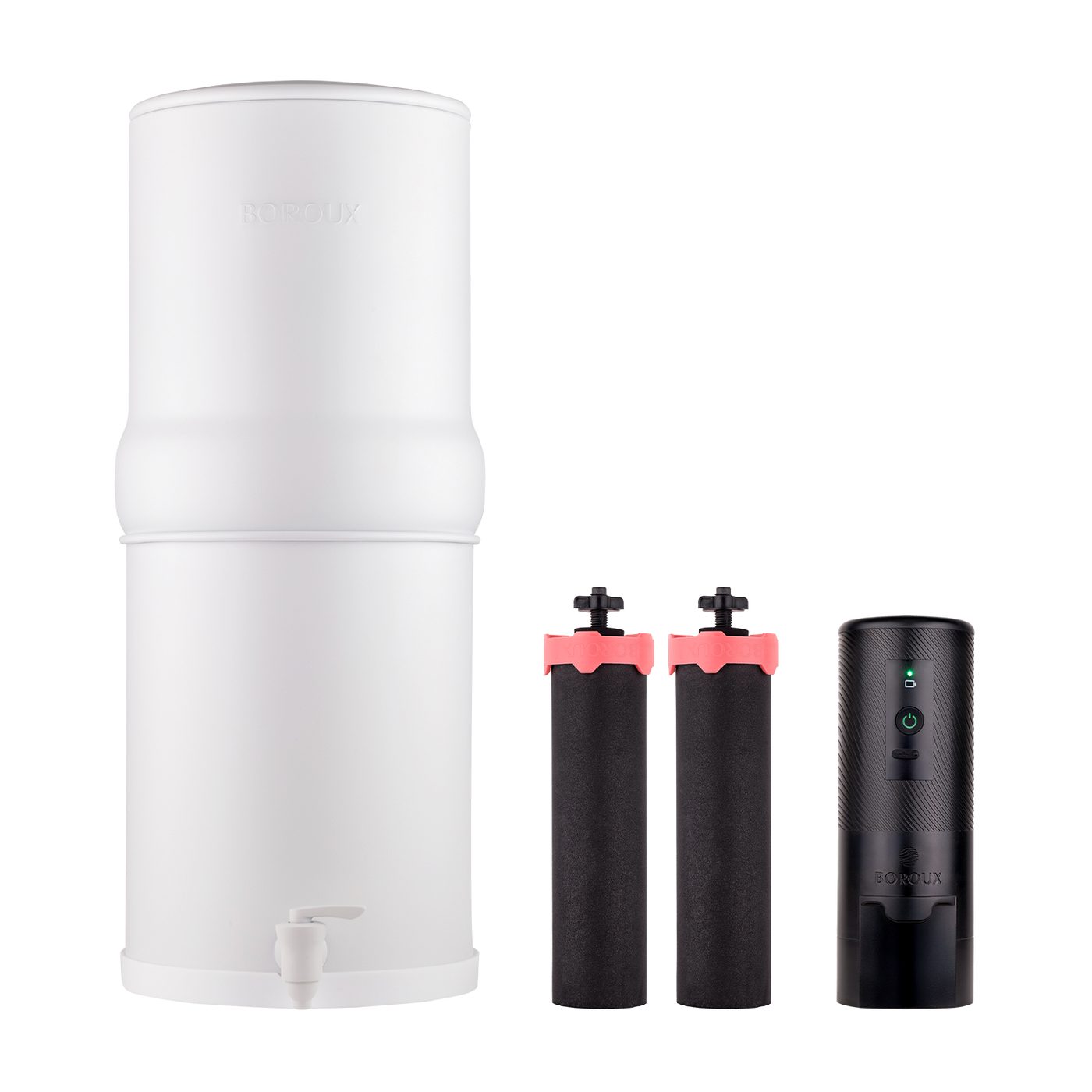
Boroux makes durable, good-looking stainless steel gravity filters that work anywhere, from a city kitchen to an off-grid cabin. Independent certification to NSF/ANSI 42, 372 and 401 adds credibility, and an automatic priming pump fixes the fiddliest part of gravity filters. Expect slower output than pressurized systems and a meaningful upfront cost.
What we like
- Food-grade stainless steel chambers that resist cracking and corrosion
- Certified to NSF/ANSI 42, 372 and 401 through the Water Quality Association
- No electricity or plumbing needed, which suits renters and emergency preparedness
- Automatic priming pump replaces the manual priming step and red dye test
- Two sizes, four finishes and optional fluoride filters
Keep in mind
- Higher upfront cost than pitchers
- Gravity filtration is slower, and the top chamber needs regular refilling
- The 3-gallon model needs generous clearance under cabinets
- Not reverse osmosis, so it does not reduce dissolved solids the way RO does
Gravity filters are one of the oldest ways to clean drinking water at home: pour water into an upper chamber, let it trickle through dense filter elements, and collect it in a lower chamber with a spigot. No power, no pressure, no plumbing. Boroux takes that format and builds it from food-grade stainless steel with modern certified filters.
We looked at Boroux's two systems, its filter certifications and lifespans, current pricing and what it is like to own a gravity filter day to day. It is a well-made option for families, renters and anyone who wants a water supply that keeps working when the power does not.
About the brand
Boroux is operated by James Enterprise Inc. in Pueblo, Colorado, and the company describes roughly 25 years of experience in water filtration. Its range is deliberately compact: two countertop systems under the Legacy name, the filters that go in them, and a shower filter.
The appeal is partly practical and partly aesthetic. The Legacy system comes in Polished, White, Black and Sage Green stainless steel, so it can sit on a counter without looking like a piece of camping gear, and stainless steel avoids the cloudy, cracked plastic reservoirs that plague cheaper gravity filters.
How the filtration works and what is certified
Water poured into the upper chamber passes through Foundation black carbon filters and collects in the lower chamber, where a ceramic valve spigot dispenses it. A standard setup uses two filters; a four-filter setup speeds up flow and spreads the workload for longer filter life.
Boroux states its certifications through the Water Quality Association:
- NSF/ANSI 42: aesthetic effects, including chlorine taste and odor and nominal particulate reduction
- NSF/ANSI 372: lead-free materials
- NSF/ANSI 401: reduction of certain emerging contaminants, with microplastics in the 0.5 to 1 micron range listed
The brand also says the filters retain beneficial calcium and magnesium. For fluoride, Boroux sells separate fluoride filters rated for 1,000 gallons that pair with the main elements.
Newer systems include an automatic priming pump. Priming, which means forcing water through a new filter to remove air before use, used to be the most frustrating part of gravity filters, and earlier Boroux models relied on a red dye test to confirm it worked. That step has now been removed.
See Boroux's current range
1.8 gallons or 3 gallons?
- Legacy 1.8-Gallon System: designed to fit beneath standard kitchen cabinets. A good fit for apartments, couples and smaller households. Regular price $349, with open-box units seen at $265.
- Legacy 3-Gallon System: the flagship, holding enough filtered water for a family's daily drinking and cooking. Regular price $399, with configurations and accessories taking it to around $355 to $455 in many listings and open-box units at $300.
Holiday bundles add stands, spigot upgrades or extra filters; a 1.8-gallon kitchen sink bundle was listed at $731 regular. Measure the space between your counter and upper cabinets before choosing the larger size, since you need clearance to lift the top chamber off and refill it.
Living with it: filter life and upkeep
Boroux recommends replacing Foundation filters every 12 months, and says its Legacy filter sets last up to a year. That is far longer than most pitcher cartridges. Fluoride filters are rated for 1,000 gallons, while the separate shower filter lasts up to three months or about 1,585 gallons.
The main trade-off is speed. Gravity filtration is slower than a pressurized under-sink system, so you get into a rhythm of topping up the upper chamber once or twice a day. Many owners keep the lower chamber full so there is always a reserve.
How Boroux compares with pitchers and reverse osmosis
It helps to place a gravity filter between the two most common alternatives.
- Versus a pitcher: a Boroux holds several times more water, its filters last around a year rather than a couple of months, and stainless steel avoids plastic reservoirs. The trade-off is a much higher upfront price and a bigger footprint.
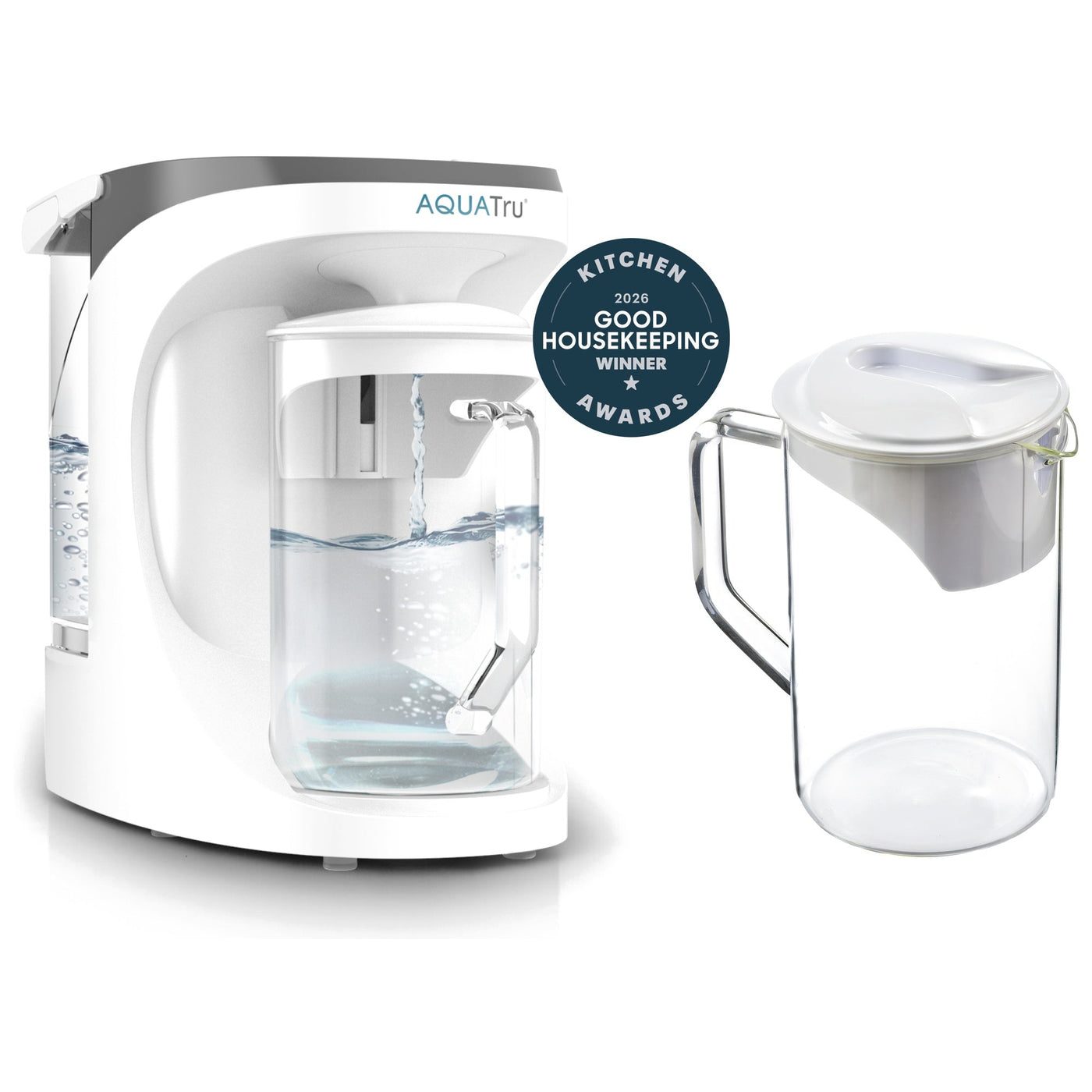
- Versus reverse osmosis: RO systems such as AquaTru or under-sink units reduce a wider range of dissolved substances and lower total dissolved solids, but they waste some water, need power or plumbing, and strip minerals. Boroux keeps minerals, wastes nothing and works off-grid, but it is not designed to match RO on dissolved contaminants.
The right choice depends on what is in your water. If your main concerns are chlorine taste, sediment and microplastics, a certified gravity filter is a strong, low-maintenance answer. If you are dealing with high nitrates, arsenic or very hard water, look at reverse osmosis or a whole-house system instead, and test first.
Pricing, shipping and warranty
Shipping is free in the US on orders of $60 or more, so even a replacement filter order usually qualifies. Orders and returns run through an online customer portal. Boroux advertises a lifetime product warranty, and The Good Finds notes this covers the stainless steel components; filters are consumables. Discount codes circulate regularly, so check before buying a full system.
Who should buy Boroux
Great for: renters, households without convenient plumbing access, families wanting a large batch of filtered water on the counter, cabins and RVs, and anyone building an emergency water plan.
Skip it if: you need high-volume water on tap with no refilling, want dissolved solids reduced the way reverse osmosis does, or have very tight counter space.
Our verdict: Boroux is one of the better-built gravity filters available, with real certifications behind it and thoughtful fixes to old frustrations like priming. It costs more than a pitcher, but it should outlast several of them.
Boroux products at a glance
| Product | What it is | Price |
|---|---|---|
| Legacy 3-Gallon System | Flagship stainless steel gravity filter for families. | from $399 |
| Legacy 1.8-Gallon System | Compact stainless steel gravity filter sized to fit under standard cabinets. | from $349 |
| Foundation Black Filters | Carbon filter elements certified to NSF/ANSI 42, 372 and 401, replaced about every 12 months. | — |
| Fluoride Filters | Add-on filters for fluoride reduction rated for 1,000 gallons. | — |
| Shower Filter | Shower filter rated for up to three months or about 1,585 gallons. | — |
Prices as listed on the brand's site at the time of our research and may change. Check the store for current pricing.
Boroux FAQs
Is Boroux legit?
Yes. Boroux is operated by James Enterprise Inc. in Pueblo, Colorado, and states its filters are certified to NSF/ANSI 42, 372 and 401 through the Water Quality Association.
Does a Boroux filter need electricity?
No. It is a gravity-fed system, so it works without power or plumbing.
How long do Boroux filters last?
Boroux recommends replacing the Foundation filters every 12 months. Fluoride filters are rated for 1,000 gallons.
Does Boroux remove fluoride?
The main carbon filters are not marketed for fluoride. Boroux sells separate fluoride filters for that purpose.
Which Boroux size should I buy?
The 1.8-gallon model suits smaller kitchens and households, while the 3-gallon model suits families but needs more clearance under cabinets.
Households that want large batches of filtered water without electricity or installation
Disclosure: InhouseHeal may earn a commission if you buy through links on this page. Our score is based on research of the brand's products, evidence, pricing and policies. How we review.