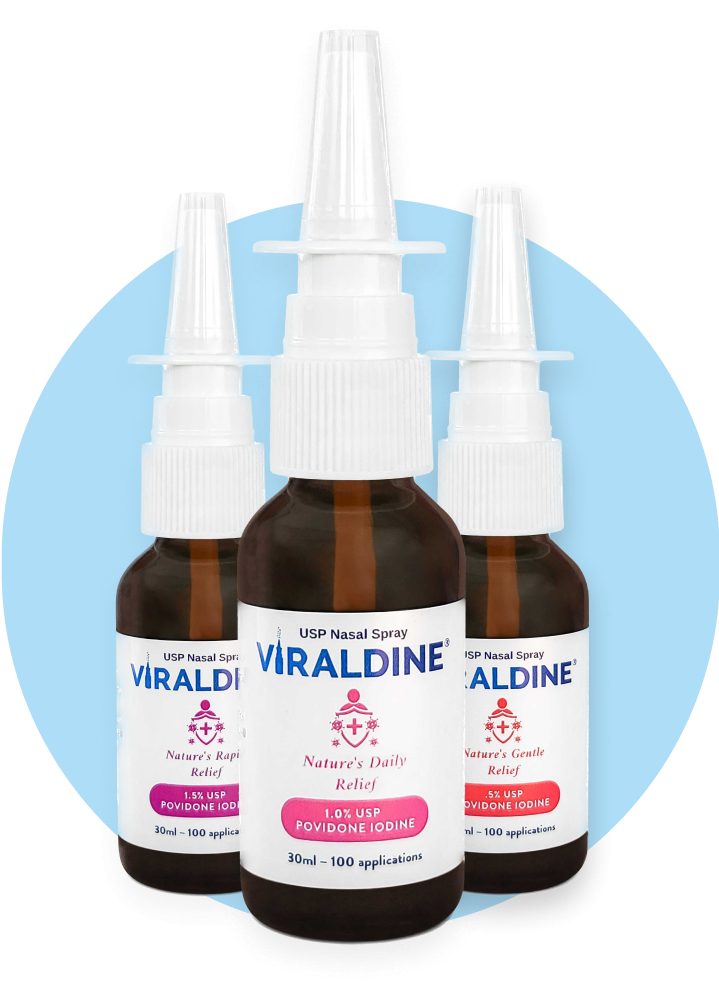
Viraldine sells simple, glass-bottled povidone-iodine sprays at a fair price and in several strengths. The product idea has some early research interest, but the brand's bold claims are unsourced and basic company and policy information is hard to find, so we rate it cautiously.
What we like
- Four clearly labeled options: 0.5%, 1% and 1.5% nasal sprays plus a 1.5% throat spray
- Saline (sodium chloride) base rather than plain water
- Packaged in glass bottles
- Single, affordable price point of about $22.49 per bottle
- Also sold through major retail channels such as Walmart
Keep in mind
- Efficacy claims on the site are not supported by cited studies
- No company name, address or clear return policy on the brand site
- Not suitable for people with iodine sensitivity or thyroid conditions
- Can cause irritation, dryness or an iodine taste, especially at 1.5%
Viraldine makes nasal and throat sprays built on povidone-iodine, the same antiseptic compound used for decades on skin before surgery and in wound care. Its sprays dilute povidone-iodine into a saline base and are marketed for congestion, sinus discomfort, allergy season and cold-and-flu season.
Iodine sprays have attracted interest from researchers and the public in recent years, but they are also easy to over-promise. We looked at the products, how the strengths differ, what is and is not known about the approach, and how transparent the company is with buyers.
What Viraldine actually is
Each Viraldine spray combines USP-grade povidone-iodine with USP sodium chloride, so the base is a saline solution rather than distilled water. Bottles are glass, and listings describe each bottle as delivering around 100 applications; retail listings show 30 ml for the nasal sprays and 60 ml for the throat spray.
The brand describes the sprays as natural and drug-free. That wording deserves context: povidone-iodine is an active antiseptic ingredient, not a botanical extract, and it has real effects on the tissues it touches. We found no FDA approval information on the brand's site for any specific use, and the product pages do not include a drug facts panel.
The four formulas compared
- 0.5% Gentle Relief Nasal Spray: the mildest strength, intended for sensitive users and lighter symptoms.
- 1% Daily Relief Nasal Spray: the everyday option the brand positions for moderate congestion and routine use.
- 1.5% Rapid Relief Nasal Spray: the strongest nasal version, aimed at more severe sinus pressure.
- 1.5% Rapid Relief Throat Spray: the same concentration in a throat spray format.
If you decide to try Viraldine, the lower strength is the sensible starting point. Higher concentrations are more likely to sting, dry the nasal lining or leave a noticeable iodine taste, and some users find the 1.5% versions too strong.
See Viraldine's current range
What the evidence says
Povidone-iodine is a well-established antiseptic, and laboratory studies have shown it can inactivate many viruses and bacteria on contact. Small clinical studies have also explored dilute povidone-iodine nasal sprays and rinses, including for chronic sinus problems and respiratory viruses. However, the research on nasal use is still limited, results have been mixed, and large, long-term trials are lacking.
Viraldine's site states that research shows its spray cleans 99.9% of pathogens and that it is formulated and recommended by doctors, but it does not cite the studies or name the doctors. Laboratory kill rates also do not translate directly into fewer illnesses or faster recovery in real life. A fair summary is that iodine sprays are a plausible hygiene tool with early evidence, not a proven way to prevent or treat infection.
Pricing, buying and policies
Every Viraldine spray we saw on the brand site was priced at about $22.49 per bottle, regardless of strength. The products also appear through retail channels such as Walmart, sometimes in two-packs. The brand has offered sitewide coupons, plus discounts for leaving a review or sharing one on social media.
What we could not find on the brand site is just as important: there is no company name, physical address, clear shipping policy or published return policy. Customer reviews mention prompt delivery, but if return rights matter to you, buying from a major retailer with its own return policy may be the safer option.
One customer review also described a promised free bottle being replaced with store credit, which is a small but telling sign that promotional terms are worth confirming in writing before you order. Keep your order confirmation and any coupon terms in case you need to contact customer service by email.
How to use an iodine spray sensibly
If you and your doctor decide a dilute povidone-iodine spray is reasonable for you, a few habits help reduce irritation and keep expectations realistic:
- Start low. Begin with the 0.5% or 1% nasal spray and only move up if you tolerate it well.
- Follow the label. Use the number of sprays and frequency the product directs, and do not combine several iodine products at once.
- Expect some color. Povidone-iodine is brown and can stain tissues, clothing and skin; wipe the nozzle after use.
- Keep it personal. Do not share nasal spray bottles, which can spread germs between users.
- Keep the basics in place. A spray is, at most, an add-on to handwashing, rest, hydration, saline rinses and recommended vaccinations.
- Watch for side effects. Mild stinging is common at first, but persistent burning, nosebleeds, a rash or swelling are signs to stop.
For seasonal allergies in particular, standard options such as saline rinses and pharmacist-recommended allergy treatments have a stronger evidence base, so it is worth discussing those first.
Who should avoid iodine sprays
Povidone-iodine is not right for everyone. Avoid it, or speak to a doctor first, if you:
- have a known iodine or povidone allergy or sensitivity;
- have a thyroid condition, or take thyroid medication or lithium;
- are pregnant or breastfeeding;
- are buying for a child;
- plan to use it daily for weeks at a time, since long-term nasal use has not been well studied.
Stop using it if you notice burning, nosebleeds or ongoing irritation. A sinus infection with fever, facial swelling, symptoms lasting more than ten days, or breathing difficulty needs medical attention, not a spray.
Our verdict
Viraldine is a reasonably priced, simply formulated product in an area that has genuine research interest. What holds it back is transparency: the claims run ahead of the evidence, and basic company and return information is missing from the brand site. If you are a healthy adult who wants to try a dilute iodine spray, start with the 0.5% or 1% strength, use it occasionally rather than constantly, and ask your doctor or pharmacist first if you have any of the risk factors above.
Viraldine products at a glance
| Product | What it is | Price |
|---|---|---|
| 0.5% Gentle Relief Nasal Spray | Mildest povidone-iodine strength in a saline base, for sensitive users. | about $22.49 |
| 1% Daily Relief Nasal Spray | Mid-strength spray positioned for everyday nasal hygiene. | about $22.49 |
| 1.5% Rapid Relief Nasal Spray | Strongest nasal version, more likely to sting or dry. | about $22.49 |
| 1.5% Rapid Relief Throat Spray | Throat spray at 1.5% povidone-iodine; has a noticeable iodine taste. | about $22.49 |
Prices as listed on the brand's site at the time of our research and may change. Check the store for current pricing.
Viraldine FAQs
What is in Viraldine nasal spray?
USP povidone-iodine at 0.5%, 1% or 1.5%, in a USP sodium chloride (saline) base, packaged in glass bottles.
Is Viraldine FDA approved?
We found no FDA approval information on the brand's website for any specific use. Povidone-iodine is a long-used antiseptic, but evidence for nasal sprays is still limited.
Which Viraldine strength should I start with?
Most people should start with the 0.5% or 1% nasal spray. Higher strengths are more likely to cause stinging, dryness or an iodine taste.
Who should not use povidone-iodine sprays?
People with iodine allergies or thyroid conditions, those taking lithium or thyroid medication, pregnant or breastfeeding people and children should avoid them unless a doctor advises otherwise.
Can Viraldine prevent colds or flu?
It has not been proven to prevent or treat infections. Laboratory results are promising, but they do not guarantee real-world protection, so keep up vaccination and other proven measures.
Adults without iodine or thyroid issues who want a saline-based nasal hygiene spray
Disclosure: InhouseHeal may earn a commission if you buy through links on this page. Our score is based on research of the brand's products, evidence, pricing and policies. How we review.