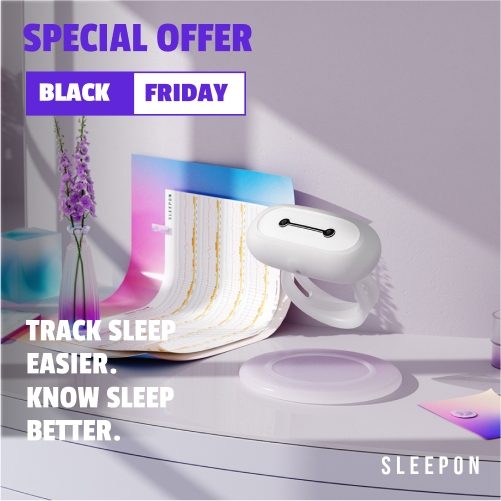
SleepOn's Go2sleep 3 is a focused, budget-minded sleep tracker worn on a finger overnight. It records blood oxygen dips, heart rate and sleep stages and lets you export reports, with no subscription. It is a screening companion, not a diagnosis: if it flags frequent oxygen drops, the next step is a proper sleep test.
What we like
- Tracks SpO2 and oxygen desaturation index (ODI), which many wrist trackers skip
- Night-only design means you do not wear it all day
- Lightweight at about 6 g with a soft food-grade silicone ring
- No subscription; app plus a web dashboard with exportable reports
- One-year warranty and 30-day returns
Keep in mind
- Battery lasts about two nights, so charging is frequent
- Not a medical device and cannot diagnose sleep apnea
- Glucose features are estimates or still listed as coming soon
- Limited company information on the website
Most sleep trackers are designed for all-day wear and treat sleep as one feature among many. SleepOn takes a narrower approach. Its Go2sleep 3 is a small sensor in a silicone ring that you slip onto a finger at bedtime, and it concentrates on what happens overnight, especially blood oxygen.
That makes it interesting for snorers, people who wake unrefreshed and anyone who wants better data before talking to a doctor. Here is what the device measures, what it costs to run and where its limits are.
About SleepOn
SleepOn is a health-tech brand whose stated mission is to offer affordable sleep solutions people can use at home. It operates two web domains, Sleeponhealth and Sleepon.us, during what it describes as a brand upgrade, with the same products on both. The website shares little about the team or headquarters, and support runs through email.
Inside the Go2sleep 3
The tracker uses dual-wavelength reflective PPG sensors at 660 nm and 940 nm, sampling at 50 Hz, to read blood flow in the finger. From that it reports:
- SpO2 (blood oxygen saturation) through the night
- ODI (oxygen desaturation index), the number of significant oxygen dips per hour
- Heart rate and HRV
- Sleep stages (light, deep and REM), a sleep score and body movement
The module measures about 22 x 30 x 18 mm and weighs around 6 g, with a plastic housing and a food-grade silicone ring. Battery life is about two nights. In the box you get the ring, a magnetic charging base, a portable charging dock and a USB cable. A ring holder set is available as a $10 add-on.
The brand has listed fasting glucose insights as coming soon, and some reviews describe glucose trend estimates. Treat any glucose feature from an optical finger sensor as experimental.
See SleepOn's current range
The app and reports
The SLEEPON App 3 adds AI-powered analysis, personalized recommendations and a self-coach feature, with week-over-week and month-over-month trend views. A web dashboard lets you view the same data on a larger screen and export reports to share with a doctor or coach. The brand says there is no subscription.
The export option is the feature we would highlight. A month of SpO2 and ODI data is far more useful in a doctor's appointment than a vague sense of being tired.
How to read your overnight data
Raw oxygen graphs can look alarming at first, so it helps to know what is normal. Healthy adults typically sit in the mid to high 90s for SpO2 during sleep, with small dips when they change position. What matters more is the pattern.
- ODI: this counts how many times per hour your oxygen drops by a meaningful amount. A consistently elevated ODI across several nights is the clearest reason to talk to a doctor.
- Clusters of dips: repeated drops grouped in the early morning or when sleeping on your back can be a pattern worth noting.
- Heart rate and HRV: a higher-than-usual resting heart rate or lower HRV after alcohol, late meals or hard training is common and useful feedback.
- Sleep stages: stage estimates from any consumer device are approximate, so focus on trends rather than exact minutes of deep sleep.
Wear the tracker for at least a week before drawing conclusions, and make sure it sits snugly so movement does not create false readings.
How it compares
Compared with all-day smart rings such as Ultrahuman, the Go2sleep 3 is cheaper and more focused on oxygen, but it does nothing during the day. Compared with a standard fingertip oximeter, it is designed to stay on comfortably all night and pairs readings with sleep staging, which a spot-check oximeter cannot do.
Price, shipping and returns
SleepOn frequently runs promotions, and we did not see a stable list price during our research, so check the current price on the official store. It sits well below the cost of premium smart rings and has no ongoing fees.
Because the brand runs regular discounts, it is rarely worth paying the full ticket price. Sign up for the newsletter or wait for a sale event if you are not in a hurry. Make sure you buy from the official Sleepon.us or Sleeponhealth store so the warranty and return terms apply, and test the fit on your index or middle finger during the first week while you are still inside the return window.
- Orders ship within 2 to 3 business days.
- Returns are accepted within 30 days of purchase.
- A one-year warranty covers the device from the purchase date.
Who it suits, and when to see a doctor instead
The Go2sleep 3 suits people who snore, partners worried about pauses in breathing, recovery-focused athletes and anyone who prefers not to wear a tracker during the day. It also makes sense as a low-cost add-on for people who already wear a smartwatch but want finger-based oxygen data at night.
What it cannot do is diagnose obstructive sleep apnea. If your reports show frequent oxygen dips, loud snoring with gasping, or daytime sleepiness, ask a doctor about a home sleep test or lab study. Services such as Lofta can arrange physician-reviewed home testing.
Our verdict
SleepOn offers a practical, subscription-free way to see what your body does overnight, with a particular strength in oxygen data. The two-night battery and thin company information hold it back from a higher score. As an affordable early-warning tool that helps you start the right conversation with a clinician, it is a smart buy.
SleepOn products at a glance
| Product | What it is | Price |
|---|---|---|
| Go2sleep 3 | Night-only finger tracker for SpO2, ODI, heart rate, HRV and sleep stages. | Check site (frequent promotions) |
| Go2sleep (original) | The earlier version of the brand's finger sleep tracker. | — |
| Ring holder set | Add-on holder set for the Go2sleep ring. | $10 with a tracker |
| SLEEPON App 3 and web dashboard | Free app and online reports with trend views and exportable summaries. | Free |
Prices as listed on the brand's site at the time of our research and may change. Check the store for current pricing.
SleepOn FAQs
Can SleepOn detect sleep apnea?
No. The Go2sleep 3 can show oxygen dips and an oxygen desaturation index that may be worth discussing with a doctor, but sleep apnea must be diagnosed with a medical sleep test.
Does Go2sleep 3 need a subscription?
The brand states there is no subscription. The app and web dashboard are included.
How long does the battery last?
About two nights, so most users charge it every day or every other day using the magnetic base.
Why wear a sleep tracker on the finger?
Fingers have dense capillaries, which can give a stronger optical signal for blood oxygen than the wrist. That is why medical pulse oximeters also clip to a finger.
What is the return policy?
SleepOn accepts returns within 30 days of purchase and offers a one-year warranty.
Snorers and data-curious sleepers who want overnight oxygen trends to discuss with a doctor
Disclosure: InhouseHeal may earn a commission if you buy through links on this page. Our score is based on research of the brand's products, evidence, pricing and policies. How we review.