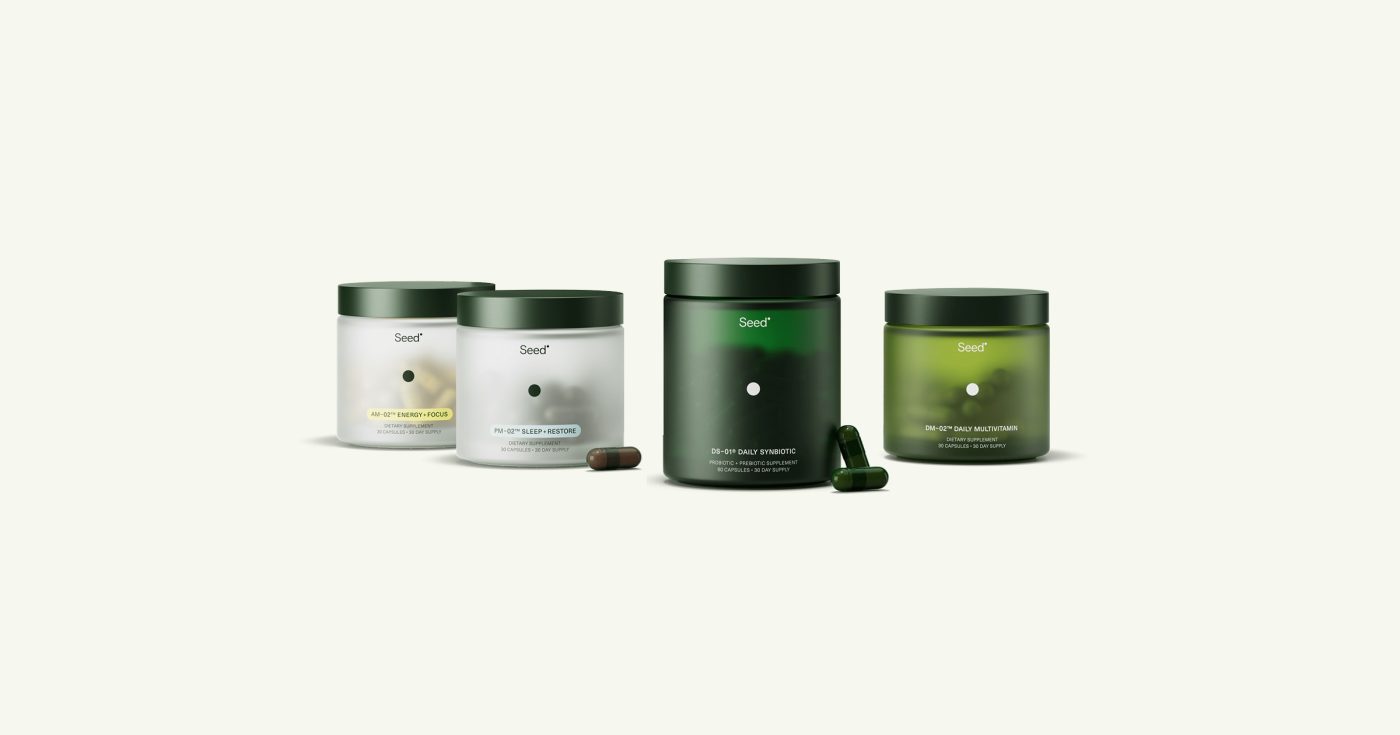
Seed is one of the most transparent probiotic brands you can buy, with a published strain list, a distinctive capsule-in-capsule design and low-waste refills. It costs far more than drugstore probiotics, so it suits people who value documentation and consistency over a bargain.
What we like
- 24 named probiotic strains with a stated count of roughly 53.6 billion AFU per daily dose
- ViaCap capsule-in-capsule design intended to protect microbes from stomach acid
- Shelf-stable, so no refrigeration is needed at home or when traveling
- Refillable glass jar and compostable refill pouches cut packaging waste
- Pomegranate-based prebiotic may suit people who react to inulin-heavy fibers
Keep in mind
- At about $50 a month it costs several times more than basic probiotics
- Very small range, so it will not replace a full supplement routine
- Some research on its delivery system was funded by the company itself
- Benefits build over weeks, and early bloating is possible while you adjust
Seed Health is a microbiome company first and a supplement store second. Rather than selling dozens of products, it has built its name on one flagship formula, the DS-01 Daily Synbiotic, plus a short list of related products for children and vaginal health. That narrow focus is a large part of its appeal: the brand names its strains, explains how its capsule is constructed and ties each claim to a specific area of health rather than vague talk about gut balance.
In our research we looked at what DS-01 actually contains, how the subscription and refill system works, what it costs per month and where its claims are well supported versus still developing. Here is what to know before you sign up.
The company behind DS-01
Seed was founded in 2018 by Ara Katz and Raja Dhir. From the start it positioned itself as a science-led alternative to loosely formulated probiotics, and it still describes its mission as reclaiming the word probiotic for products that are strain-specific and studied. In practice that means detailed labeling, a scientific advisory network and published work on its own capsule technology, some of which the company funded.
Sustainability is the other half of the brand story. DS-01 ships first in a refillable glass jar, and later deliveries arrive as refill pouches made from a compostable biofilm, so you are not throwing away a plastic bottle every month.
What is actually inside the Daily Synbiotic
DS-01 is a synbiotic, which simply means it pairs probiotics (live microbes) with a prebiotic (a compound that feeds them). The headline specifications are:
- 24 probiotic strains selected for digestive, skin, heart and immune outcomes, with a stated total of roughly 53.6 billion AFU per two-capsule dose. AFU, or active fluorescent units, is a counting method designed to capture live cells more precisely than the older CFU measure.
- A prebiotic outer capsule made with polyphenols from Indian pomegranate. Seed says this is gentler than common fibers such as inulin for people with sensitive digestion.
- ViaCap delivery, a capsule-within-a-capsule built to shield the probiotics from stomach acid and bile so more reach the colon.
- No refrigeration. The capsules are shelf-stable, which makes travel simple.
The full dose is two capsules daily. Seed suggests starting with one a day for the first few days and then moving to two, which can help limit early gas or bloating. Its heart-related claim is worded carefully: the brand says DS-01 supports cholesterol levels already in a normal range, not that it lowers high cholesterol.
See Seed Health's current range
The rest of the range in brief
The catalog is short, and each product has a clear job:
- PDS-08 Pediatric Daily Synbiotic is a powder for children that mixes into cool food or drinks, designed to support digestive health and a developing gut microbiome.
- VS-01 Vaginal Synbiotic is a vaginal capsule with strains chosen to support a healthy vaginal microbiome and pH balance.
If your main interest is adult gut health, DS-01 is the only product you need to consider. The others are specialist add-ons for specific households and needs, and they are worth discussing with a pediatrician or gynecologist first.
Price, subscription and delivery
DS-01 is sold on subscription at $49.99 for a 30-day supply. The first box is a welcome kit with the glass jar and a small travel vial; after that you receive refill pouches. That monthly cost is well above drugstore probiotics, although few of those publish strain-level detail or use a comparable delivery system.
US shipping is free, and Seed has offered international delivery for a flat fee of about $10. Deliveries can be managed from your account. Refund terms for DS-01 are not spelled out prominently, so read the current policy in the help center if a guarantee matters to you.
Getting the most from your first month
Take the capsules at the same time each day, on an empty stomach or with food, and give it at least several weeks before judging results. Seed itself frames DS-01 as a long-term habit rather than a quick fix.
Who Seed suits, and who should look elsewhere
Seed is a strong fit if you want one well-documented daily probiotic, care about packaging waste or have struggled with fiber-heavy gut products in the past. It also suits people who like to read the science behind what they take, because the brand explains its choices in more depth than most.
It is less suitable for budget-focused shoppers, for anyone who wants a single store for multivitamins, protein and gut care, or for people looking for fast, dramatic changes. If you have a compromised immune system, a serious digestive condition or are pregnant, speak with your doctor before starting any probiotic.
How it compares
Against a typical drugstore probiotic, DS-01 offers more strains, a named prebiotic and a delivery system built for survival through digestion, at roughly three times the monthly cost. Against metabolic specialists such as Pendulum, which focus on hard-to-culture strains like Akkermansia for blood sugar goals, Seed is the broader everyday option. Ritual's Synbiotic+ is a simpler, lower-priced choice if you already use Ritual multivitamins and want one subscription.
Our verdict on Seed Health
Seed earns its premium reputation through transparency and thoughtful design rather than marketing volume. DS-01 is a carefully specified, shelf-stable synbiotic with a clear dose and a low-waste refill system. The trade-off is price and a very small range. If you want one probiotic you can understand and stick with, it is one of the more credible choices available in 2026; if cost is the priority, a simpler, cheaper probiotic may serve you just as well for everyday use.
Seed Health products at a glance
| Product | What it is | Price |
|---|---|---|
| DS-01 Daily Synbiotic | A two-capsule daily synbiotic with 24 probiotic strains and a pomegranate-based prebiotic in a capsule-in-capsule design. | $49.99/month |
| PDS-08 Pediatric Daily Synbiotic | A children's probiotic and prebiotic powder that mixes into cool food or drinks. | — |
| VS-01 Vaginal Synbiotic | A vaginal capsule with strains selected to support vaginal microbiome and pH balance. | — |
Prices as listed on the brand's site at the time of our research and may change. Check the store for current pricing.
Seed Health FAQs
Is Seed Health legit?
Yes. Seed is an established microbiome company founded in 2018 that publishes its strain list and explains its capsule technology in detail. As with any supplement, its claims are the brand's own and have not been evaluated by the FDA.
Does Seed DS-01 need to be refrigerated?
No. DS-01 is shelf-stable, so you can keep it in a cupboard or take the travel vial on trips without worrying about temperature.
How many DS-01 capsules should I take?
The full dose is two capsules a day. Seed suggests starting with one capsule daily for the first few days, then moving to two, which can help your digestion adjust.
What is the difference between AFU and CFU?
Both are ways of counting probiotic cells. AFU (active fluorescent units) uses a flow-cytometry method intended to capture live cells more precisely, while CFU (colony forming units) counts cells that grow in a lab culture. The two figures are not directly comparable.
How much does Seed cost?
DS-01 costs $49.99 for a 30-day supply on subscription, with free US shipping. The first order includes a glass jar, and later shipments are refill pouches.
Adults who want one transparent, well-researched daily probiotic rather than a shelf of gut products
Disclosure: InhouseHeal may earn a commission if you buy through links on this page. Our score is based on research of the brand's products, evidence, pricing and policies. How we review.