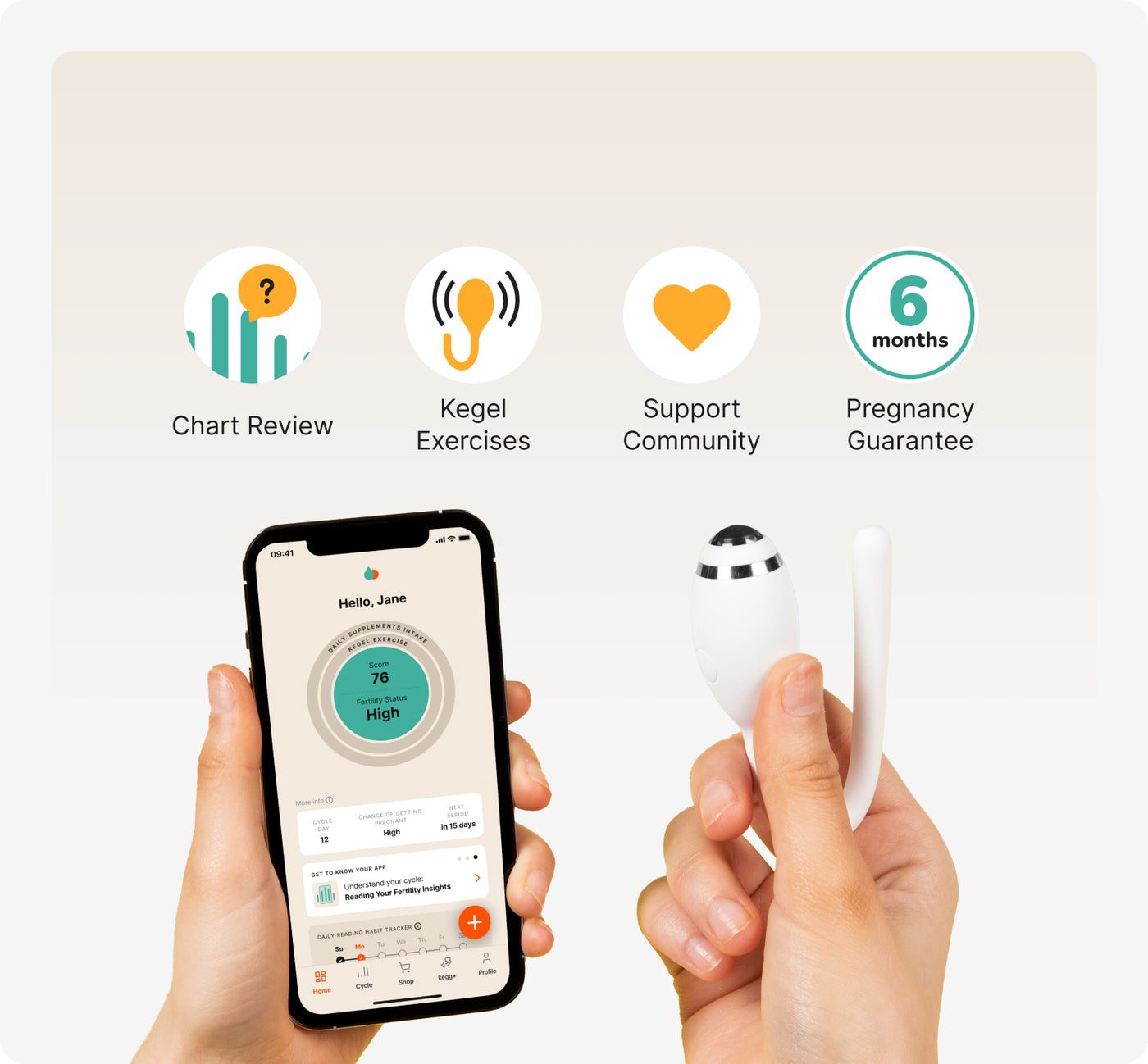
kegg offers a different take on fertility tracking: a small reusable device that senses changes in cervical fluid and turns them into a daily fertility score. There are no ongoing costs and it doubles as a pelvic floor trainer, but the upfront price is high, readings need consistency and it is not a diagnostic tool.
What we like
- Reusable device with no monthly fees, strips or refills
- Quick daily reading of about two minutes
- Tracks cervical fluid changes that signal the fertile window
- Can also be used for kegel and pelvic floor training
- HSA/FSA eligible, with a pregnancy guarantee on recent offers
Keep in mind
- High upfront cost compared with ovulation strips
- Needs daily, consistent use to build reliable data
- May be less helpful for very irregular cycles
- Registered as a Class I device, not a diagnostic or contraceptive tool
Most people trying to conceive rely on calendar apps, basal body temperature or LH ovulation strips. Each has drawbacks: calendars guess, temperature confirms ovulation only after it has happened, and strips are a recurring cost. kegg takes a different signal. Its device measures changes in cervical fluid, which becomes thinner and more slippery in the days before ovulation, and uses that to flag your most fertile days.
The device is reusable, made from medical-grade silicone and pairs with a companion app. It was developed by founder Kristina Cahojova and also works as a kegel trainer for pelvic floor exercises. We looked at how it works, what it costs and who will get the most from it.
How kegg works
kegg uses impedance sensing, measuring how easily a tiny electrical signal passes through the fluid in the vaginal environment. Fertile cervical fluid has a different electrolyte composition from non-fertile fluid, so changes in those readings track the shift toward ovulation.
Each day you insert the device for a reading of about two minutes, and it syncs to the app automatically. The app shows a Fertility and Cervical Mucus Score, an ovulation probability and trends across cycles. Over time it learns your pattern and highlights a fertile window of roughly two days. Because it picks up the changes before ovulation, it can help you time intercourse rather than simply confirming ovulation afterward.
What you get for the price
kegg's headline price is high, but there are no ongoing costs. At the time of our research, the tracker was listed at a sale price of about $279, down from a list price of $477, and other recent sources reported a similar discount from around $467 to about $269. Recent offers have bundled a pregnancy guarantee, a conception program and free shipping.
For comparison, people using LH strips every cycle for six months or more can spend a meaningful amount, so the gap narrows if you expect to try for a while or want to use kegg across several pregnancies. kegg accepts HSA and FSA payments and offers buy-now-pay-later options.
About the pregnancy guarantee
kegg has offered a refund if you do not conceive within a set period of use, recently six months, subject to terms and conditions. The details have varied between promotions, so read the current terms carefully before relying on it.
See kegg's current range
Using kegg well
- Be consistent: take your reading at the same time each day, ideally within the window the app recommends.
- Start early in your cycle: daily readings in the run-up to ovulation give the app the contrast it needs.
- Combine signals if you like: some people pair kegg with LH strips or a temperature-tracking wearable during the first few cycles to cross-check.
- Clean it properly: wash the silicone device after each use according to the instructions.
Expect the first cycle or two to feel like a learning period while the app gathers data. Results become more useful once you have a few cycles of history.
The pelvic floor bonus
kegg's shape means it can double as a kegel trainer, and the brand says many users keep using it for pelvic floor exercises after the trying-to-conceive phase. A strong pelvic floor can help with bladder control and recovery after childbirth, so this is a genuinely useful second purpose. If you have pelvic pain or significant postpartum symptoms, a pelvic floor physical therapist can guide you on the right exercises.
Who kegg suits
kegg is a good fit for people actively trying to conceive with reasonably regular cycles who want more insight than a calendar app, find temperature tracking or strips frustrating, or want a single purchase rather than ongoing costs. It also appeals to anyone who values privacy and wants their data in one app.
It is less suitable if your cycles are highly irregular, if you have conditions such as PCOS that make fertility signals harder to read, or if you are uncomfortable with an internal device. It is not a contraceptive and should not be used to avoid pregnancy. kegg is registered with the FDA as a Class I device, which is not the same as clearance for diagnosis, and the brand ships within the US.
When to see a specialist
If you are under 35 and have been trying for a year, or over 35 and trying for six months, book a fertility evaluation rather than relying on tracking alone.
kegg compared with other tracking methods
- Calendar apps: free and easy, but they estimate ovulation from past cycle lengths and can be well off if your cycle varies.
- LH ovulation strips: affordable and widely available, detecting the hormone surge a day or so before ovulation. The ongoing cost and daily urine tests put some people off.
- Basal body temperature: confirms that ovulation has already happened, which is useful for learning your pattern but less helpful for timing within the current cycle. Wearables have made it far easier.
- kegg: reads cervical fluid changes that appear before ovulation, with no recurring cost, but requires an internal reading each day and a larger upfront spend.
Many people combine methods. Using kegg alongside LH strips or a temperature-tracking wearable for the first few cycles can give you extra confidence in what the app is showing you.
Our verdict
kegg is an innovative, well-designed alternative to strips and thermometers, and its ability to spot fertile cervical fluid before ovulation is genuinely helpful for timing. The upfront cost is steep and the guarantee terms can shift between promotions, but there are no recurring fees and the pelvic floor function adds lasting value. For people with fairly regular cycles who want a reusable, data-rich tool, it is worth considering.
kegg products at a glance
| Product | What it is | Price |
|---|---|---|
| kegg Fertility Tracker | A reusable silicone device that reads cervical fluid changes and syncs to the kegg app. | about $269–$279 on sale |
| kegg app | Shows daily fertility and cervical mucus scores, ovulation probability and cycle trends. | included |
| Pregnancy guarantee | A refund offer if you do not conceive within the stated period of use, subject to terms. | bundled with recent offers |
Prices as listed on the brand's site at the time of our research and may change. Check the store for current pricing.
kegg FAQs
How does kegg work?
kegg uses impedance sensing to measure changes in the electrolyte makeup of cervical fluid. A daily two-minute reading syncs to the app, which identifies your fertile window.
How much does kegg cost?
At the time of our research, kegg was on sale for about $269 to $279, down from a list price of around $467 to $477. There are no monthly fees or refills.
Is kegg FDA approved?
kegg is registered with the FDA as a Class I fertility device. Registration is not the same as FDA clearance or approval, and kegg is not a diagnostic tool.
Can kegg be used as birth control?
No. kegg is designed to help people trying to conceive and should not be used to prevent pregnancy.
Does kegg work with irregular cycles?
It may be less helpful for very irregular cycles. People with conditions such as PCOS should discuss tracking options with their doctor.
People trying to conceive who want to track fertile cervical fluid without test strips
Disclosure: InhouseHeal may earn a commission if you buy through links on this page. Our score is based on research of the brand's products, evidence, pricing and policies. How we review.